
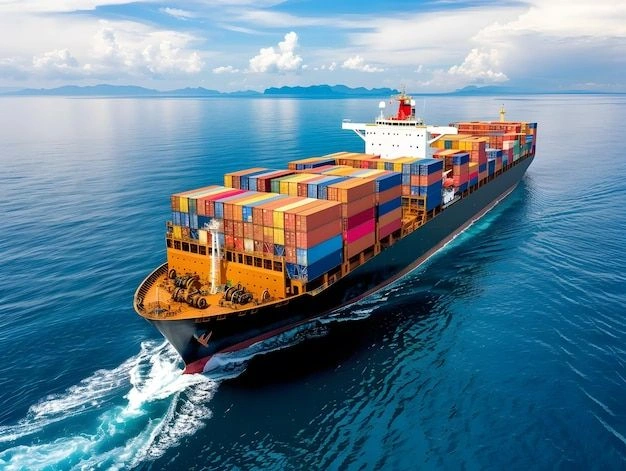
India’s shipping industry has long been a hidden giant in a country where more than 90% of trade by volume transits its ports, from crude oil to consumer goods. With plans to add 62 additional vessels for ₹51,383 crore in FY 2026-27, the government is heading towards total self-reliance or Atmanirbhar Bharat in marine capabilities. It is not just about bigger fleets but also a direct reaction to global disturbances like the conflicts in the Red Sea to protect India’s economy from dependency on foreign countries.
The Announcement That Rocked the Sea
Union Minister for Ports, Shipping and Waterways Sarbananda Sonowal announced the announcement during a high-level meeting in New Delhi on April 29, 2026. He chaired the discussion which was attended by bigwigs of Ministry of Petroleum, oil PSUs and Directorate General of Shipping. “Shipping is now at the heart of economic resilience under the vision of PM Narendra Modi,” Sonowal said in a straightforward manner. This order for 62 ships will add 2.85 million gross tonnage (GT) of capacity, a huge increase given India’s fleet had recently crossed 14.2 million GT adding 92 ships in FY26.
What’s the rush? Just think of the recent chaos: Houthi strikes in the Red Sea have added thousands to the cost of shipping each container and weeks to routes to Europe and the US. For India, which depends on the sea for 35-50% of its crude imports, vulnerabilities strike hard. This, Sonowal said, was a “strategic necessity”, and it’s hard to disagree as transshipment continues to flow through centers like as Colombo or Singapore.
Atmanirbhar Roots in Maritime Amrit Kaal:
This push is directly connected with Maritime Amrit Kaal Vision 2047, the plan for world class ports, coastal shipping and sustainable blue economy. It’s born out of 150+ discussions with stakeholders and global standards, and it’s eyeing 300+ activities by the centenary of independence. Flag carrier Shipping Corporation of India (SCI) to add 10 million GT and 216 vessels by 2047 with ₹1 lakh crore investment The new 62 form a portion of that and focus on containers, LPG carriers, crude tankers and even green tugs for eco-friendly ops.
But India’s fleet has been growing steadily, from 13.75 million GT in 2023 to over 14.2 million currently, but still lags behind countries like as China or Japan. The public and private yards have a capacity of 22.6 lakh DWT topped by the Cochin Shipyard (1.1 lakh DWT) and Hindustan Shipyard. Yet, commercial shipbuilding is modest, with a global share of less than 1% at $1.1 billion in 2024. That is part of bigger incentives, a ₹51,383 crore that intends to flip that, with subsidies like 20% on shipyard contracts, reducing over time.
Major benefits leading to this:
Spotlighting subsidies for PSUs ferrying crude, coal, fertilizers.
Longer delivery times up to six years for special ships.
Links to Container Manufacturing Assistance Scheme (CMAS) in Budget 2026-27.
Why Shipping is Important to India’s Pocket and its Workforce
Shipping isn’t some side gig, it supports 1.4% of GDP directly, with the overall maritime cluster at 5%. Coastal and inland waterways add another 0.4% while services such as logistics reach 2.1%. Exports? Seaborne trade surpassed $690 billion in recent years, boosting FX. But obstacles bite: 75% transshipment abroad drives up expenses and ports struggle with ultra-large vessels.
The real winner here? Jobs. The sector employs lakhs – seamen, yard workers, logistics pros. The new ships represent thousands more jobs, from welders in Cochin to engineers aboard SCI tankers. SCI has 207 ships in the pipeline valued ₹1.5 lakh crore, which will take the share of indigenous tankers from 5% today to 69% by 2047. For a Viksit Bharat it provides for skilled employment such in a shipyard in Maharashtra or the beaches of Tamil Nadu.
It’s a good time throughout the world. China is dominating the high-end projects, creating openings for India’s lower-value fleet like as tankers. As disruptions soar, holding more hulls reduces risks – think fewer delays for Mumbai’s refineries or Gujarat’s exports.
Analyzing the Fleet Boost
These 62 ships aren’t random, they’re targeted. Anticipate:
Trade in container ships surges.
LPG and crude transporters to lock down energy imports.
Green tugs push sustainability over IMO requirements.
2.85 million GT combined eclipses previous year’s 1.58 million from 92 adds. That’s three times faster than the record in FY26. Private players and PSUs like SCI are in the race with joint ventures aiming 59 more tankers.
Shipyards also get ready. Cochin, Mazagon Dock-the public giants, plus privates such L and T. Previously, a ₹70,000 crore package was targeted to match Asia’s titans, to boost capacity to 3.3 lakh GT by 2030. But there were challenges. Tech deficiencies. Shortages of competent workers. Government incentives bridge that, subsidizing Indian owners in international tenders.
What will this mean for the day-to-day world of trade? An exporter in Vizag sending auto parts to Europe may shave days from transit by avoiding Suez reroutes. Or Kerala fisherman who profit from greater coastline connectivity.
Tackling Headwinds Head On
Nothing goes to plan. The yards in India are good on the maintenance front but are not efficient enough in building new ships when compared to South Korea. Infrastructure behind – many ports too small for mega-ships and reliant on foreign hubs. Green shift? Tough with ancient fleets eating up fuel.
Global woes compound: Red Sea surcharges $4,000 a crate, 20-day delays India’s answer? Diversify paths. Build resilience. Along with the commercial push, the Navy is also adding 15 warships in 2026, and all of them would be built in India.
What if the disruptions get worse – will 62 be enough? Sonowal’s outfit took a gamble on it, combining public funds with private enterprise.

