
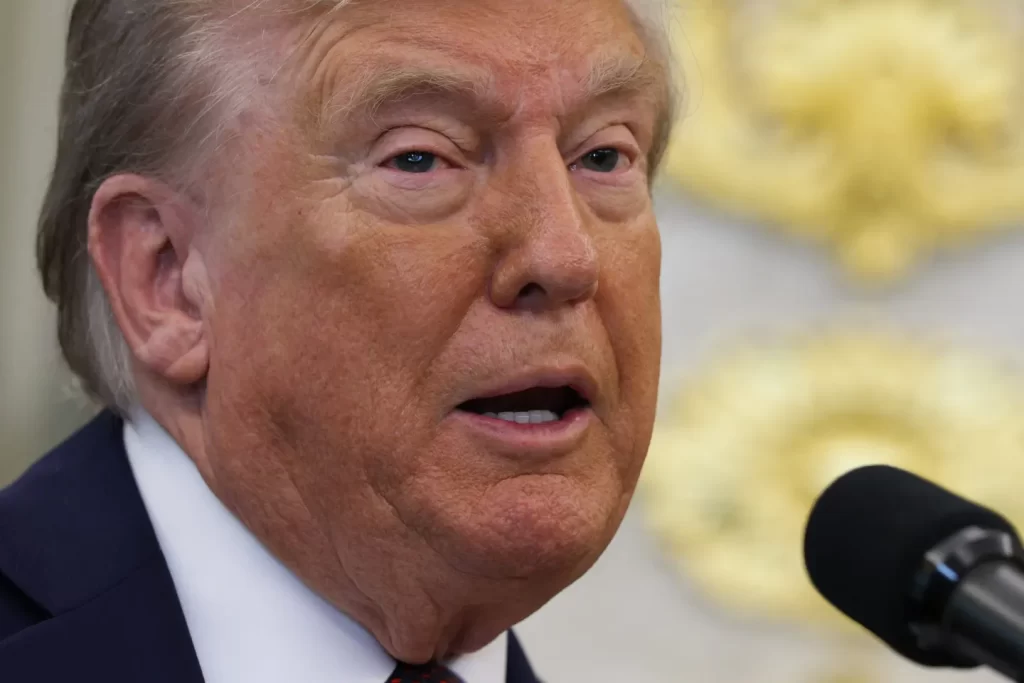
September 2025 – Former U.S. President Donald Trump sparked controversy in early September 2025 when he suggested that if “something bad happens,” he might “just blame AI.” The remark came during discussions surrounding a viral video that showed objects being thrown from a White House window, a clip his staff had confirmed as authentic.
The video, which quickly circulated across social media platforms, captured a brief moment of apparent disorder in one of the White House corridors. While the objects themselves were never identified, the incident raised questions about security protocols and staff accountability. In response, Trump appeared to downplay the seriousness of the situation, suggesting that artificial intelligence could serve as a convenient explanation if public scrutiny intensified.
Trump’s comment has ignited debate among political analysts, social media users, and technology experts. Some observers argue that the statement highlights the growing role of AI in modern public discourse, where digital tools increasingly influence narratives and perceptions. Others see it as a reflection of Trump’s characteristic approach of deflecting criticism through provocative remarks.
“AI is becoming a frequent scapegoat in both politics and media,” said Dr. Emily Harris, a technology policy expert at Georgetown University. “Statements like these, coming from a high-profile figure, underscore the need for public understanding of AI’s actual capabilities and limitations.”
This incident follows a series of recent events where viral media, misinformation, and AI-generated content have played central roles in shaping public opinion. Experts warn that casual references to blaming AI could contribute to confusion, erode trust in digital media, and complicate accountability in government institutions.
Trump’s remark also reignites discussions about the ethical use of AI and its portrayal in political discourse. As AI continues to advance, the intersection of technology and governance is becoming increasingly complex, prompting questions about responsibility, transparency, and public awareness.
While the White House staff confirmed the authenticity of the video, no official explanation has been provided for the objects’ presence or the circumstances surrounding the incident. Trump’s statement, whether serious or tongue-in-cheek, illustrates the potential for AI to become a convenient explanation for unpredictable events in the public eye.
As political and technological debates intensify, experts emphasize the importance of separating fact from fiction, especially when influential figures make statements linking real-world events to emerging technologies like AI. The incident is likely to remain a talking point in both political and tech circles in the weeks to come.

