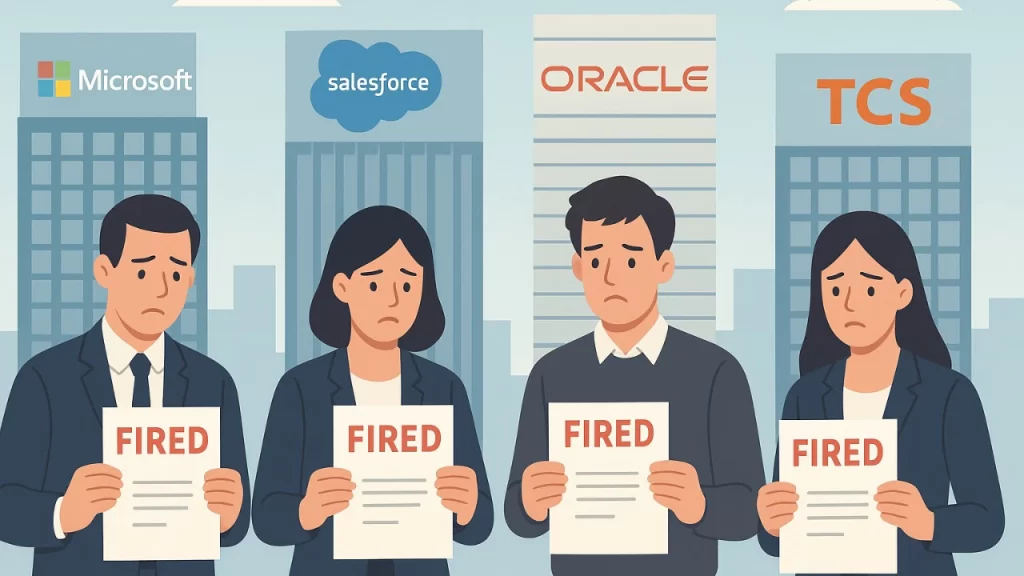
Microsoft, Salesforce, and Oracle Among Companies Restructuring Workforces Despite Strong Revenues
In a move that has sent ripples across the technology sector, several major tech companies, including Microsoft, Salesforce, and Oracle, have initiated substantial layoffs in 2025. The trend, experts say, is part of a broader industry-wide strategy to streamline operations and focus heavily on artificial intelligence (AI) integration.
Despite reporting strong financial results in recent quarters, these companies are taking steps to reduce workforce sizes, citing the need for efficiency and agility in an increasingly AI-driven market. Microsoft, for instance, announced plans to cut thousands of positions globally, emphasizing a reallocation of resources toward AI research and development. Salesforce and Oracle have similarly confirmed significant staff reductions, framing them as strategic decisions rather than responses to financial distress.
Industry analysts suggest that these layoffs are symptomatic of a larger transformation underway in the tech ecosystem. “The push toward AI is forcing companies to rethink their organizational structures,” said Anil Mehta, a technology consultant based in Bengaluru. “Firms are investing heavily in automation, machine learning, and AI tools, which often requires smaller, more specialized teams.”
This trend comes amid a period of unprecedented investment in artificial intelligence across the globe. With AI applications now permeating everything from cloud computing and enterprise software to customer relationship management, companies are positioning themselves for long-term technological dominance. However, this shift has created tension in the labor market, as highly skilled employees are retrained, redeployed, or, in some cases, let go.
Employees affected by these layoffs have expressed mixed reactions. While some view the restructuring as a necessary step toward innovation, others have raised concerns over job security in a market increasingly dominated by automation. Various professional forums and social media platforms have become active spaces for discussions on career transitions and skill upgrades in the AI era.
The layoffs also raise broader questions about the future of work in the tech sector. Analysts predict that while some traditional roles may decline, new opportunities will emerge in AI development, data analysis, and cloud infrastructure. Companies are expected to focus recruitment efforts on these high-demand areas, reshaping workforce priorities over the next decade.
Governments and industry bodies are closely monitoring the situation. In India and the United States, labor departments have emphasized the importance of upskilling initiatives to mitigate the impact of workforce reductions. Educational institutions are also ramping up programs in AI, machine learning, and robotics to prepare the next generation of tech professionals.
As the technology industry undergoes this significant transformation, the emphasis on AI-driven innovation appears set to continue. While layoffs create immediate challenges for employees, companies maintain that these moves are crucial to remaining competitive in a rapidly evolving digital landscape. The coming months will likely reveal how these workforce changes influence both corporate strategies and broader industry dynamics.