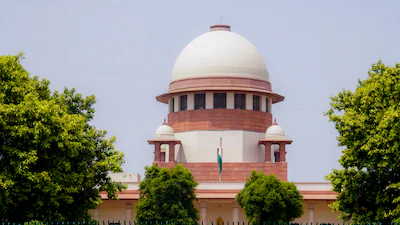
September 11, 2025 — The Supreme Court of India on Thursday reserved its verdict on the presidential reference seeking clarity on timelines for governors and the president to grant assent to state bills. A five-judge Constitution Bench, led by Chief Justice of India B.R. Gavai, concluded ten days of extensive hearings on the issue, which has significant implications for the balance of power between the Union and the states.
The presidential reference was made under Article 143 of the Constitution following disputes raised by multiple state governments over prolonged delays in gubernatorial assent. States argued that governors withholding or delaying bills for months undermines the principles of federalism and legislative autonomy. The Union government, however, emphasized that the Constitution provides discretionary powers to governors and the president, and any attempt to set rigid timelines would interfere with established constitutional conventions.
During the hearings, the Bench considered submissions from senior advocates representing state governments, the Centre, and constitutional experts. Several states, including Tamil Nadu, Kerala, Punjab, and Telangana, argued that indefinite delays in granting assent to duly passed state legislation amounts to a “pocket veto,” which was never envisaged by the framers of the Constitution. They urged the Court to direct that assent or return of bills should be time-bound to ensure legislative efficiency.
The Centre countered these arguments, cautioning that imposing strict deadlines could limit the constitutional role of governors and the president as checks within the legislative process. The Attorney General of India noted that while delays may be undesirable, they often stem from the need to ensure compliance with constitutional provisions and avoid conflict between state and central laws.
Chief Justice Gavai and the Bench observed that the matter involves a delicate balance between legislative independence and constitutional accountability. The Court also posed searching questions about whether the absence of express timelines in the Constitution was deliberate and whether judicial intervention to prescribe such limits would amount to rewriting constitutional provisions.
The case is widely seen as a constitutional milestone, with potential to redefine the scope of gubernatorial and presidential powers. A clear ruling could also impact Centre–state relations, particularly in opposition-ruled states that have frequently clashed with governors over delays in bill approvals.
The verdict, once delivered, is expected to provide long-awaited clarity on whether the executive authority of governors and the president includes indefinite discretion, or whether it must be exercised within a reasonable and defined timeframe.
As India awaits the judgment, constitutional scholars and political leaders alike view the outcome as a test of the judiciary’s role in safeguarding federal principles while upholding constitutional checks and balances.