
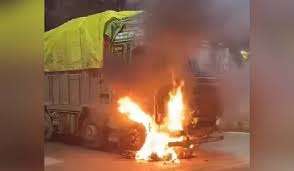
A busy stretch of Indore’s Airport Road turned into a scene of devastation on Monday evening when a heavy truck, allegedly driven by a drunk driver, slammed into motorcycles, cars and pedestrians. The crash killed at least two people and left more than ten injured. Several vehicles caught fire after the collision, prompting a major rescue and firefighting effort.
How the Crash Unfolded
According to police, the incident occurred near Bada Ganpati temple, a densely trafficked junction. Eyewitnesses say the truck was moving at high speed when it lost control and rammed into a motorcycle and multiple other vehicles before toppling on its side. Sparks from the impact ignited fuel from the wreckage, causing the truck and nearby bikes to catch fire.
Casualties and Hospitalisation
Two people, including at least one motorcyclist, were declared dead on arrival at hospital. Between nine and thirteen others suffered fractures, burns and head injuries. Victims were rushed to Geetanjali and other nearby hospitals by passers-by and emergency teams.
Driver in Custody
Police have identified and detained the driver, who they say appeared intoxicated. A blood-alcohol test has been ordered. Officers are also examining how a loaded truck entered a section of the city where heavy vehicles are restricted during peak hours.
Emergency Response
Fire crews reached the site within minutes to put out the blaze and clear debris. Traffic on the arterial road remained disrupted for more than an hour while rescuers pulled out victims and investigators documented the scene.
Public Outcry
Residents and commuters expressed anger at lax enforcement of drunk-driving and heavy-vehicle rules. Local civic groups have demanded stricter checks on commercial drivers and random breath tests at major city entry points.
Conclusion
The Indore truck crash has underscored how dangerous a combination of alcohol and high-speed driving can be in urban areas. As investigations continue, families of the victims and road safety advocates are urging authorities to tighten monitoring of commercial vehicles and improve emergency medical response to prevent further loss of life.

