
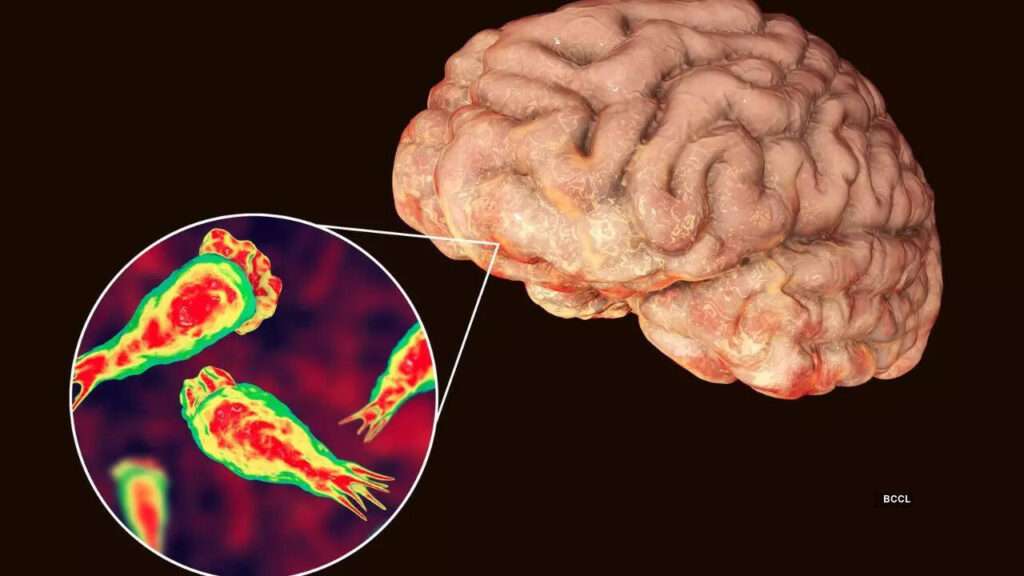
Kerala is facing a growing health concern following a surge in cases of a rare but deadly infection caused by the brain-eating amoeba Naegleria fowleri. The infection, known as Primary Amoebic Meningoencephalitis (PAM), has so far claimed 19 lives across the state in 2025, with three fatalities reported in the past month, including that of an infant. Health officials confirmed that the total number of confirmed cases has risen to 69 this year, raising alarm over the unusual spread of the disease.
The amoeba, which thrives in warm freshwater sources, enters the body through the nose and travels to the brain, causing severe inflammation and destruction of brain tissue. Early symptoms often resemble other forms of meningitis, including fever, headache, nausea and stiff neck, but quickly progress to confusion, seizures, hallucinations and coma. The infection advances rapidly, and once diagnosed, survival chances are typically extremely low.
State health authorities have issued strict advisories on water safety, urging the public to avoid swimming or bathing in untreated freshwater bodies such as ponds, lakes and poorly maintained wells. Citizens have also been cautioned against using unboiled or unfiltered water for nasal rinsing, a practice that can increase the risk of exposure. In addition, chlorination drives are being conducted across several districts to ensure water safety in wells, swimming pools and household tanks.
Officials say that unlike last year, when infections were largely confined to specific areas, this year’s cases have appeared sporadically across different regions, making it harder to trace the source of contamination. The spread has been described as more dispersed, highlighting the possibility of broader environmental factors at play, including rising temperatures and stagnant water conditions. Experts suggest that climate change may be influencing the survival and spread of N. fowleri in water bodies.
While Primary Amoebic Meningoencephalitis has a global survival rate of less than three percent, Kerala has reported relatively better outcomes this year. The state’s health minister stated that the survival rate has risen to about 24 percent, attributing the improvement to early detection, rapid hospital response and the use of miltefosine-based combination therapies. Doctors have been advised to consider the possibility of PAM in all meningoencephalitis-like cases to ensure timely treatment.
Medical experts continue to warn that despite improved detection, the infection remains nearly always fatal. The public has been urged to seek immediate medical attention if symptoms appear after exposure to freshwater sources. Authorities are also increasing surveillance by conducting environmental sampling to detect the amoeba in public water systems.
The rising number of deaths has triggered public concern, with many residents limiting their contact with natural water bodies. Hospitals are on alert to test suspected cases, and district administrations have stepped up awareness campaigns to inform communities about preventive measures.
Kerala’s outbreak is being closely monitored by health agencies across India. Officials emphasized that while the disease is rare, its high fatality rate demands caution and cooperation from the public. The state government has assured that measures are being intensified to prevent further spread, but warned that the only effective strategy remains prevention and strict adherence to water safety guidelines.
The surge of Naegleria fowleri infections has underscored the vulnerability of communities to rare pathogens under changing environmental conditions. Health experts stress that continuous vigilance, coupled with strong public health responses, will be critical in reducing future casualties and ensuring the state is better prepared for similar challenges.

