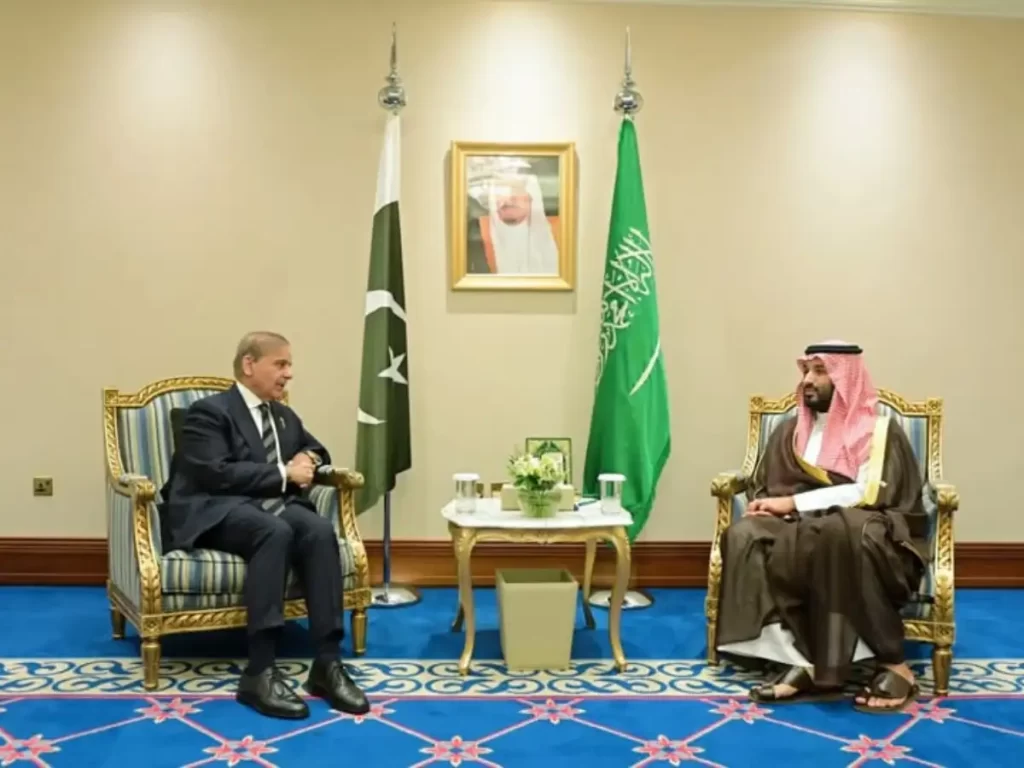
Saudi Arabia and Pakistan have formalized a landmark mutual defense agreement, signaling a strategic shift in the Middle East and South Asia. The pact, signed in Riyadh on September 17, outlines a mutual defense commitment and includes provisions that could allow Saudi Arabia access to Pakistan’s nuclear program, according to Pakistan’s Defense Minister Khawaja Asif.
Under the agreement, an attack on one party will be considered an attack on both, a principle resembling NATO’s collective defense framework. Asif emphasized that the pact is defensive in nature and is not aimed at any specific country. However, he confirmed that Pakistan’s nuclear capabilities could potentially extend to Saudi Arabia, effectively placing Riyadh under Islamabad’s nuclear umbrella. The minister also noted that the pact is open for participation by other Arab nations, potentially expanding the coalition’s regional influence.
The agreement has significant implications for India. Officials in New Delhi have expressed concerns over the inclusion of nuclear deterrence, urging Saudi Arabia to consider India’s security sensitivities, given the longstanding strategic ties between the two nations. Analysts suggest that the pact could alter the balance of power in South Asia, with the potential to trigger recalibrations of regional defense and strategic policies.
Geopolitical experts note that the pact comes amid rising regional tensions, including the recent attack on Qatar and questions about the reliability of U.S. security commitments in the Gulf. For Saudi Arabia, strengthening ties with Pakistan appears to be a strategic move to bolster its defense capabilities and ensure regional security through partnerships beyond traditional Western alliances.
While Pakistan maintains that the agreement is primarily defensive, the nuclear dimension of the pact has drawn particular attention. Observers warn that providing nuclear deterrence access to Saudi Arabia could further complicate South Asian security dynamics and potentially spark a regional arms recalibration.
The broader international community is closely monitoring the development. Any future expansion of the pact to include other Arab nations could significantly reshape the geopolitical landscape of the Middle East and South Asia. Analysts caution that the agreement may lead to new alignments and strategic partnerships, affecting regional stability.
In conclusion, the Saudi-Pakistan defense pact marks a pivotal moment in regional security strategy, carrying both military and nuclear implications. Governments and analysts worldwide will be watching closely as its implementation unfolds, assessing its long-term impact on regional stability and international relations.