
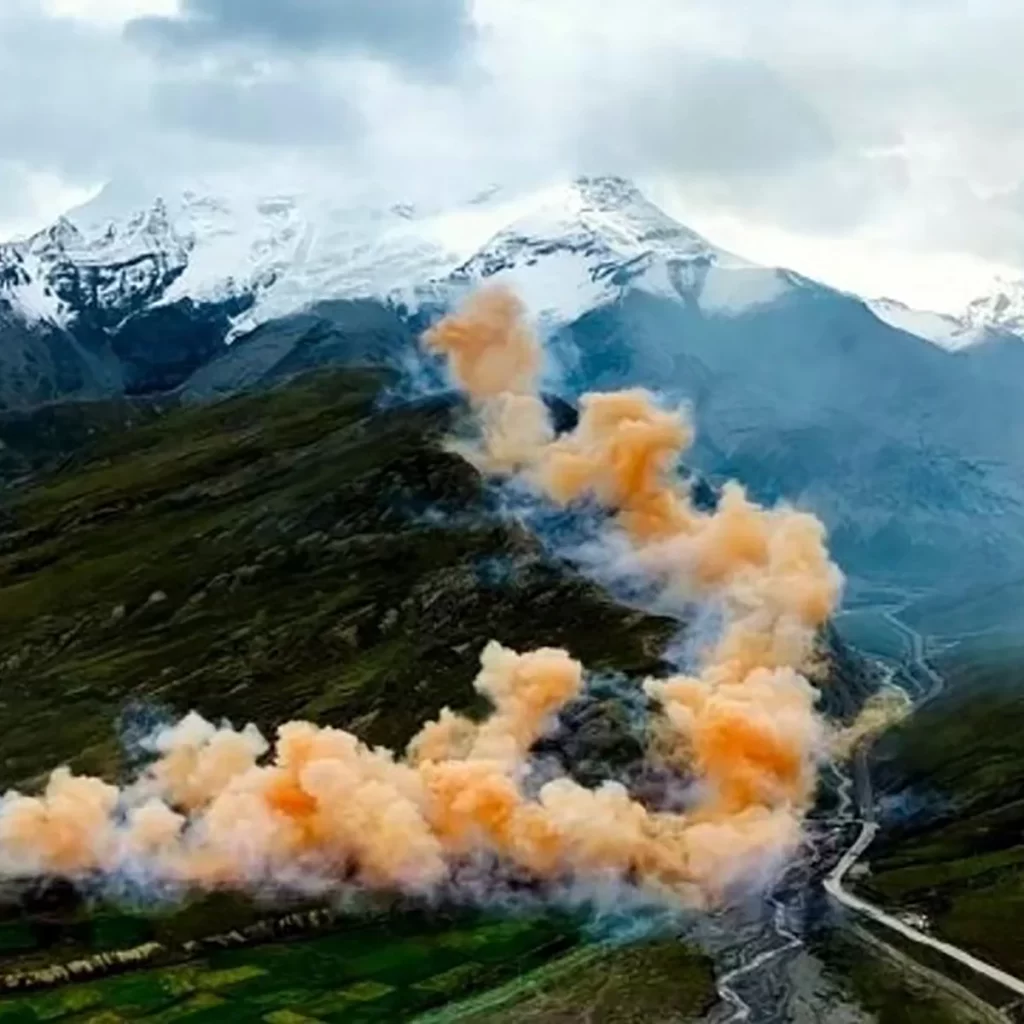
Outdoor apparel brand Arc’teryx is facing widespread criticism following a high-altitude fireworks display in the Tibetan Himalayas. The event, dubbed “Rising Dragon,” was co-organized with renowned Chinese artist Cai Guo-Qiang and took place on September 19, 2025, in Shigatse’s Gyangze County at an elevation of approximately 5,500 meters. Intended as a promotional stunt to celebrate Indigenous mountain culture, the display featured colorful pyrotechnics tracing a dragon shape across the mountain ridgeline.
Despite claims that biodegradable materials were used and wildlife was relocated to minimize environmental impact, the spectacle drew immediate backlash. Critics argued that the event contradicted Arc’teryx’s commitment to environmental sustainability and disrespected the sacredness of the Tibetan Plateau. The display garnered over 2 million views on social media platforms, with many users expressing outrage over the potential harm to the fragile ecosystem.
In response to the public outcry, both Arc’teryx and Cai Guo-Qiang issued apologies. Arc’teryx stated that the event “was out of line with our values” and pledged to reevaluate its approach to environmental stewardship. Cai Guo-Qiang expressed regret, acknowledging “many oversights” and committing to assist with any necessary cleanup efforts.
The controversy has prompted an official investigation by local authorities in Shigatse. The city announced the formation of an investigation team to assess the environmental impact of the fireworks display and determine appropriate actions. The China Advertising Association also condemned the event, accusing the organizers of misleading environmental respect and eroding consumer trust.
This incident underscores the growing scrutiny faced by brands operating in ecologically sensitive regions. It highlights the importance of aligning promotional activities with environmental and cultural values, particularly when engaging with Indigenous communities and sacred landscapes.
As the investigation unfolds, the incident serves as a cautionary tale for companies seeking to balance creative expression with corporate responsibility. The outcome may influence future marketing strategies and public perceptions of brands operating in similar contexts.

