
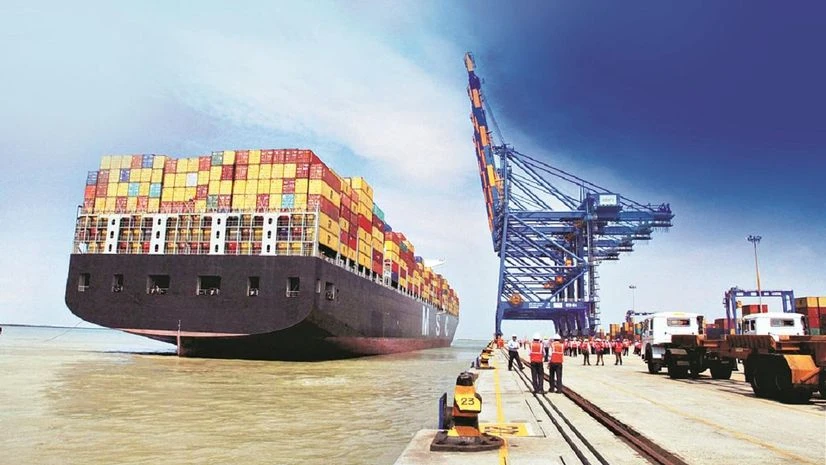
The escalating conflict in West Asia, coupled with disruptions in the Red Sea shipping lanes, is emerging as a serious challenge for India’s economy. The war between Israel and Iran-aligned groups and the Houthi rebel attacks on vessels in the Red Sea are creating ripple effects across global trade and energy markets, with India particularly vulnerable due to its dependence on these routes and its heavy reliance on imported crude oil.
The Red Sea, including the Bab-el-Mandeb Strait and the Suez Canal, remains a vital lifeline for India’s trade with Europe and West Asia. Nearly 80 percent of India’s exports to Europe pass through this maritime corridor, making the country acutely exposed to security risks in the region. As shipping companies reroute vessels around the Cape of Good Hope to avoid attacks, transportation times have increased by up to two weeks, pushing up freight and fuel costs while also raising insurance premiums. For Indian exporters in sectors such as textiles, pharmaceuticals, petrochemicals, and MSMEs, these added costs directly affect global competitiveness.
Energy security is another critical concern. India imports over 80 percent of its crude oil, with a majority sourced from West Asia. The ongoing instability has raised fears of supply disruptions and higher crude prices, which could have a cascading effect on inflation and the current account deficit. Government officials have already cautioned that rising oil prices, fueled by maritime disruptions and regional conflict, may undermine growth projections for the current financial year. Elevated costs of liquefied natural gas imports are also expected to weigh heavily on domestic industries.
In response to these developments, India has stepped up naval deployments in the Indian Ocean and the Gulf of Aden under Operation Sankalp to ensure the safe passage of commercial shipping. Enhanced surveillance and maritime domain awareness initiatives are being implemented to safeguard trade routes. Diplomatically, New Delhi is treading carefully by engaging with multiple stakeholders, including Saudi Arabia, the United Arab Emirates, Iran, and Egypt, in an effort to secure both its energy supplies and strategic interests without being drawn into the ongoing conflict.
At the policy level, India is also working to diversify its energy sources by increasing imports from Russia, the United States, and Africa, while simultaneously boosting investments in renewable energy to reduce long-term reliance on West Asian oil. Efforts are being made to develop alternative trade corridors and strengthen port infrastructure to reduce dependence on vulnerable maritime chokepoints like the Suez Canal.
The economic implications, however, remain immediate and pressing. Higher shipping costs and insurance premiums are feeding into domestic inflation, while exporters continue to struggle with thinning profit margins. For micro, small, and medium enterprises, the challenges are especially severe, as they lack the financial resilience to absorb prolonged supply chain disruptions.
The combined impact of the West Asia conflict and the Red Sea crisis underscores the fragile nature of India’s economic and energy security framework. Unless tensions ease and maritime security improves, India will continue to face inflationary pressures, slower export growth, and strategic dilemmas in balancing its foreign policy in a volatile neighborhood.

