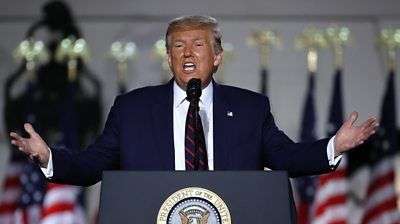
In a forceful address at the United Nations General Assembly (UNGA) on Tuesday, President Donald Trump sharply criticized the United Nations, global migration policies, and renewable energy initiatives while announcing sweeping changes to the U.S. H-1B visa program. His remarks signal a significant pivot in U.S. immigration policy and a reaffirmation of America-first economic priorities.
Trump began his speech by directly challenging the role of the United Nations. He accused the UN of failing to protect national sovereignty and of pursuing policies that he claimed undermine economic stability. “The United Nations is not living up to its promise. It is time for nations to prioritize their own citizens,” Trump stated. A large portion of his address focused on climate change and renewable energy. Trump dismissed climate change initiatives as a “great con job” and criticized nations — especially in Europe — for aggressively pursuing renewable energy policies. According to Trump, such measures damage economies and threaten energy security. “We cannot allow renewable energy ideologies to bankrupt our future,” he added.
Trump also strongly criticized migration policies in Europe and other parts of the world. He described open-border policies as “suicidal” and warned of the societal consequences of unchecked migration. His remarks reaffirmed his administration’s stance on stricter border controls and prioritizing national security.
Alongside his UNGA address, the Department of Homeland Security (DHS) announced a proposed overhaul of the H-1B visa program. Under the new proposal, the current lottery-based system will be scrapped in favor of a wage-based selection process. Applicants with higher wages and specialized skills would be given priority, aiming to attract top-tier talent and safeguard U.S. workers. The DHS also proposed a significant increase in visa application fees, citing the need to fund domestic infrastructure and innovation initiatives. Supporters argue this change will ensure that the visa program benefits both employers and American workers. Critics, however, warn that the overhaul could slow down recruitment for technology companies and increase labor shortages in specialized sectors.
Trump’s speech drew mixed reactions. Supporters hailed his firm stance on national sovereignty and his direct approach to immigration reform. Critics accused him of undermining international cooperation, especially regarding climate change. The proposed H-1B visa changes also sparked debate among business leaders, labor unions, and immigration advocates. Experts suggest that these shifts could reshape U.S. immigration policy for years to come, influencing global talent flows and international relations. “This is more than a policy change — it’s a fundamental shift in how the U.S. approaches immigration and global engagement,” said Dr. Laura Simmons, a political analyst at Georgetown University.
President Trump’s UNGA address underscored his administration’s determination to challenge global institutions, alter immigration systems, and reject certain climate policies. The proposed changes to the H-1B visa program mark one of the most significant immigration policy shifts in recent U.S. history, potentially reshaping both the nation’s workforce and its standing in the global community.