
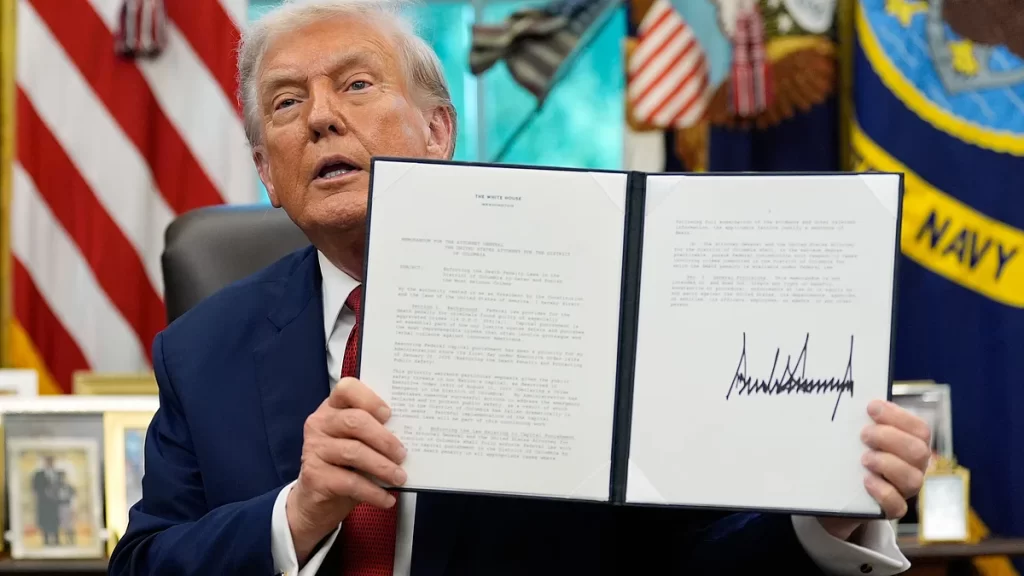
Former U.S. President Donald Trump announced a sweeping trade policy change on September 25, imposing a 100% tariff on imports of branded and patented pharmaceutical products, effective October 1, 2025. The measure seeks to encourage domestic manufacturing of pharmaceuticals by requiring companies to build production facilities in the United States to avoid the tariff.
The policy has raised concerns about potential disruptions in the global pharmaceutical trade. However, industry experts believe that the impact on India’s exports to the U.S. will be limited, as most of India’s pharmaceutical shipments consist of generic drugs, which are exempt from the tariff.
Policy Details and Objectives
According to the new directive, branded and patented drug imports will face a 100% import duty unless the manufacturing company is actively establishing a plant in the United States. The move aligns with Trump’s broader “America First” economic agenda, aimed at reducing reliance on overseas production, enhancing domestic capabilities, and safeguarding the nation’s pharmaceutical supply chain.
Impact on India’s Pharma Exports
India is the world’s largest supplier of generic medicines, with a significant portion of its pharmaceutical exports destined for the United States. In FY2025, India exported approximately $10 billion worth of medicines to the U.S., with generic drugs forming nearly 90% of these exports. This distinction means the new tariff will likely have minimal direct impact on India’s pharmaceutical trade.
Dr. Ravi Shankar, an industry analyst, said, “The tariff affects only branded and patented drugs. Since India dominates the generic drugs sector in the U.S., the effect will be contained, though long-term implications should be monitored.”
Market Reaction and Future Outlook
Following the announcement, Indian pharmaceutical stocks recorded a dip, with companies like Sun Pharmaceutical Industries, Cipla, and Dr. Reddy’s Laboratories registering losses of up to 5%. Market watchers attribute the drop to investor concerns about possible expansions of tariff coverage to complex generics and biosimilars in the future.
Strategic Response from India
Indian pharmaceutical firms are reportedly evaluating strategies to safeguard their exports, including increasing investments in overseas production and supply chain diversification. Industry bodies have also called for dialogue with U.S. trade authorities to clarify the tariff’s scope and ensure continuity in bilateral trade relations.
While Trump’s 100% tariff on branded pharmaceuticals marks a major shift in U.S. trade policy, the move is unlikely to significantly affect India’s pharmaceutical exports in the short term. However, the development underscores the importance of strategic adaptability for Indian exporters to navigate evolving trade landscapes.

