
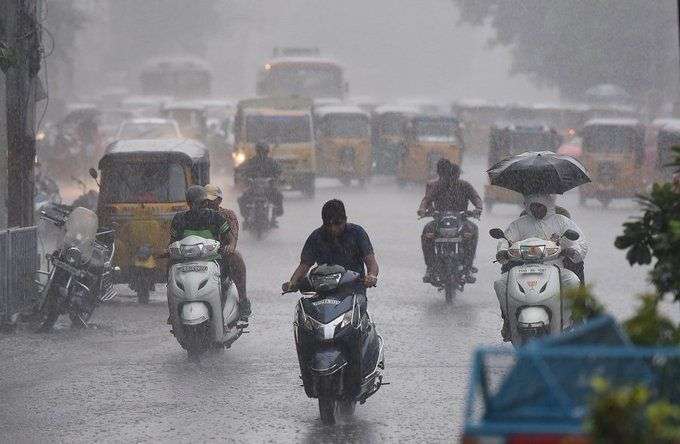
Heavy rains lashed Delhi and the National Capital Region (NCR) on Tuesday, bringing widespread relief from the prolonged heat but plunging the city into chaos with severe waterlogging, massive traffic snarls, and disruption of public transport. The sudden downpour, which began in the early hours, continued through the day, severely impacting daily life across the region.
According to the India Meteorological Department (IMD), the rainfall was triggered by a low-pressure system combined with moist easterly winds. The IMD issued an orange alert for Delhi and surrounding NCR districts including Noida, Gurugram, Ghaziabad, and Faridabad, warning residents of further spells of moderate to heavy rain over the next 24 to 48 hours. Officials also indicated that rainfall intensity may remain high during peak traffic hours, heightening concerns about congestion and flooding.
The heavy showers inundated several arterial roads and underpasses, with areas such as Moti Bagh, ITO, Dwarka, Gurugram’s Sohna Road, and Noida Sector 62 reporting severe waterlogging. Commuters struggled through knee-deep water, while traffic police were deployed in large numbers to manage snarls that stretched for several kilometres. The Delhi Traffic Police issued continuous advisories on social media, urging motorists to avoid severely waterlogged stretches.
Public transport was also hit hard. Delhi Metro operations slowed down on multiple lines as trains were delayed due to signalling disruptions caused by the rain. Several bus routes were diverted or cancelled, further inconveniencing passengers. In Gurugram, ride-hailing services faced a surge in demand, with commuters complaining of exorbitant fares and long waiting times. Airlines operating from Indira Gandhi International Airport advised passengers to leave early for the airport, citing delays caused by traffic congestion on approach roads.
Despite the disruptions, the rainfall brought respite from the sweltering heat that had gripped the region throughout September. Delhi recorded maximum temperatures nearly 5°C above normal over the past week, and the rains pushed the mercury down significantly, providing temporary relief. Environmental experts also noted that the rain helped reduce air pollution levels, at least for the short term.
However, urban planners raised concerns about the city’s recurring vulnerability to waterlogging. Experts pointed out that poor drainage systems and unchecked urbanisation have made Delhi-NCR increasingly prone to flooding even during moderate rainfall. “The city’s drainage infrastructure is not designed to handle sudden downpours of this scale. Long-term solutions are urgently needed, otherwise such disruptions will keep repeating,” said an urban planning specialist.
Civic authorities claimed that pumps were deployed across several flooded areas and emergency teams were working on clearing blocked drains. The Municipal Corporation of Delhi (MCD) and Gurugram Metropolitan Development Authority (GMDA) both stated that control rooms were functioning round-the-clock to address complaints.
With the festival season underway, including Navratri preparations in full swing, residents expressed worry that more rain could dampen celebrations and further complicate travel plans. Traders in local markets reported reduced footfall on Tuesday, as shoppers avoided venturing out due to waterlogged streets.
The IMD has forecast light to moderate rainfall in parts of Delhi and NCR on Wednesday, with heavy spells expected in isolated pockets. Authorities have urged residents to stay alert, avoid non-essential travel during heavy showers, and report emergencies to civic helplines.
While the rains offered a much-needed break from the oppressive heat, they also served as a stark reminder of Delhi-NCR’s inadequate urban infrastructure. For residents, the relief from soaring temperatures has come at the cost of paralysed mobility and waterlogged streets, a pattern that continues to repeat with every monsoon surge.

