
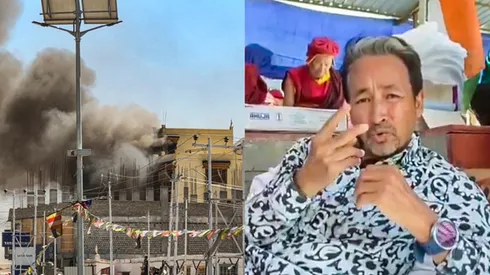
The Kargil Democratic Alliance (KDA) announced on Tuesday that it is suspending all dialogue with the central government until activist Sonam Wangchuk and other protest leaders detained in Ladakh are released. The decision follows Wangchuk’s arrest under the National Security Act (NSA) after violent protests in Leh on September 24 that left several dead and many injured.
Sonam Wangchuk, a prominent education reformer and activist advocating for Ladakh’s statehood and inclusion under the Sixth Schedule of the Constitution, was taken into custody on September 26. Authorities accused him of making provocative statements that incited unrest during the protests. Wangchuk was subsequently transferred to Jodhpur Central Jail, over 1,000 kilometers away from Ladakh. Wangchuk has denied the charges, calling them politically motivated and asserting that the protests were peaceful and intended to highlight Ladakh’s aspirations for self-governance.
In a press statement, KDA co-chairperson Asgar Ali Karbalai condemned Wangchuk’s detention and accused the government of portraying Ladakhis as “anti-national.” Karbalai said, “We will not be part of any talks with the Centre until Sonam Wangchuk and other detained protesters are freed, arrests are halted, and a judicial inquiry into the September 24 incident is initiated.”
The KDA’s stance aligns with the earlier position of the Leh Apex Body (LAB), which had withdrawn from scheduled talks with the central government. Both groups are demanding a judicial probe into the police firing during the protests, the release of all detainees, and the withdrawal of cases filed against protesters.
The Ministry of Home Affairs (MHA) responded by stating it remains “open for dialogue at any time,” while reaffirming that Wangchuk’s detention was in accordance with the law. Government officials reiterated their position that maintaining law and order is paramount amid the unrest.
The developments mark a significant escalation in the ongoing Ladakh unrest, which traces its roots to the revocation of Jammu and Kashmir’s statehood in 2019 and Ladakh’s exclusion from the Sixth Schedule. Local leaders and civil society groups have long demanded greater autonomy and constitutional safeguards for the region. The current impasse threatens to deepen the divide between Ladakh’s leadership and the central government.
Observers say the KDA’s withdrawal of talks underscores the deep political grievances in Ladakh. How the Centre responds in the coming days could have far-reaching implications for Ladakh’s political landscape and the broader discourse on regional autonomy in India.

