
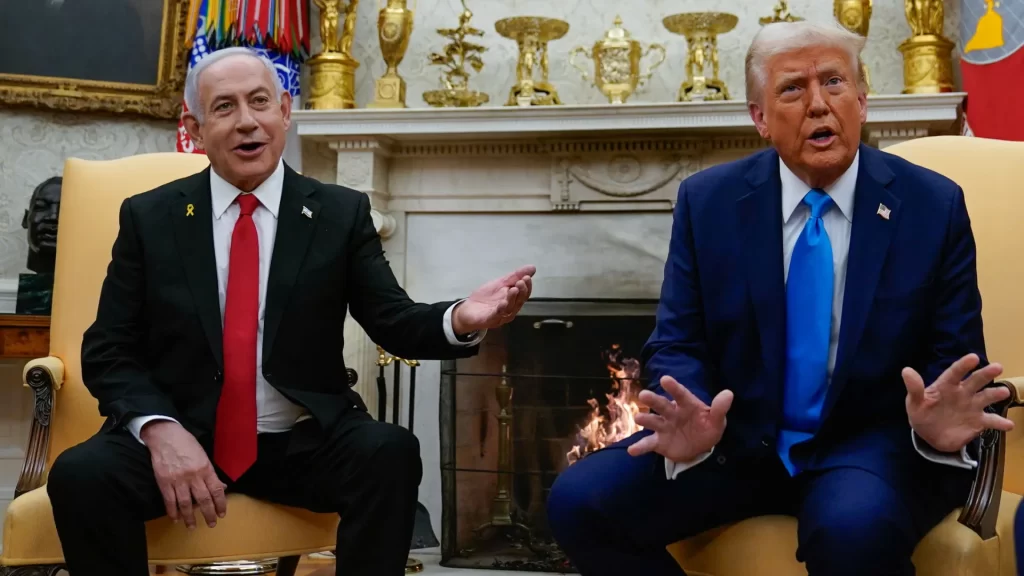
In a significant diplomatic move, former U.S. President Donald Trump on September 29, 2025, unveiled a detailed 20-point peace plan aimed at resolving the escalating Gaza conflict. The proposal outlines a framework for a ceasefire, humanitarian aid, and long-term stability between Israel and Hamas, amid growing international concern over violence in the region.
The White House statement described the plan as “a comprehensive effort to restore peace, address humanitarian needs, and ensure security for both Israelis and Palestinians.” The announcement comes at a time of heightened tension, with Israel recently confirming the targeted killing of a senior Hamas commander in an airstrike, an action that has drawn global attention.
India’s Prime Minister Narendra Modi welcomed the plan, calling it “a constructive step towards lasting peace in the Middle East.” Modi emphasized that dialogue and diplomacy remain crucial for resolving the humanitarian crisis and reducing casualties in Gaza. India’s support reflects its growing diplomatic role in international conflict resolution.
Trump’s peace proposal includes provisions for an immediate ceasefire, hostage exchanges, humanitarian aid corridors, and the establishment of a joint peace committee involving Israeli, Palestinian, and international representatives. Key elements include the release of Israeli hostages within 72 hours, in exchange for Palestinian prisoners held by Israel, and the provision of humanitarian relief to Gaza under United Nations supervision.
The announcement has elicited varied reactions globally. Israeli officials have expressed cautious optimism, while Hamas leaders have questioned the feasibility of the plan without prior negotiation guarantees. Analysts note that the plan’s success depends heavily on both parties’ willingness to engage in dialogue and the broader geopolitical dynamics influencing the conflict.
The Gaza conflict, now entering its sixth month, has already resulted in thousands of casualties and significant humanitarian distress. International calls for a ceasefire have intensified, with the United Nations urging all parties to avoid further escalation. Trump’s peace plan has added a new dimension to diplomatic efforts, with India’s endorsement signaling a possible shift in regional support.
Experts suggest that while the plan offers a structured approach to ending hostilities, its implementation faces challenges due to deep-rooted political mistrust and ongoing violence. “The success of any peace initiative in Gaza depends on political will and sustained international engagement,” said Dr. Farah Al-Mansour, a Middle East policy analyst.
As global attention focuses on Gaza, the coming weeks will be critical in determining whether Trump’s peace proposal will move beyond the drafting stage into actionable implementation. For now, the plan has reinvigorated diplomatic discourse and drawn both hope and skepticism from the international community.

