
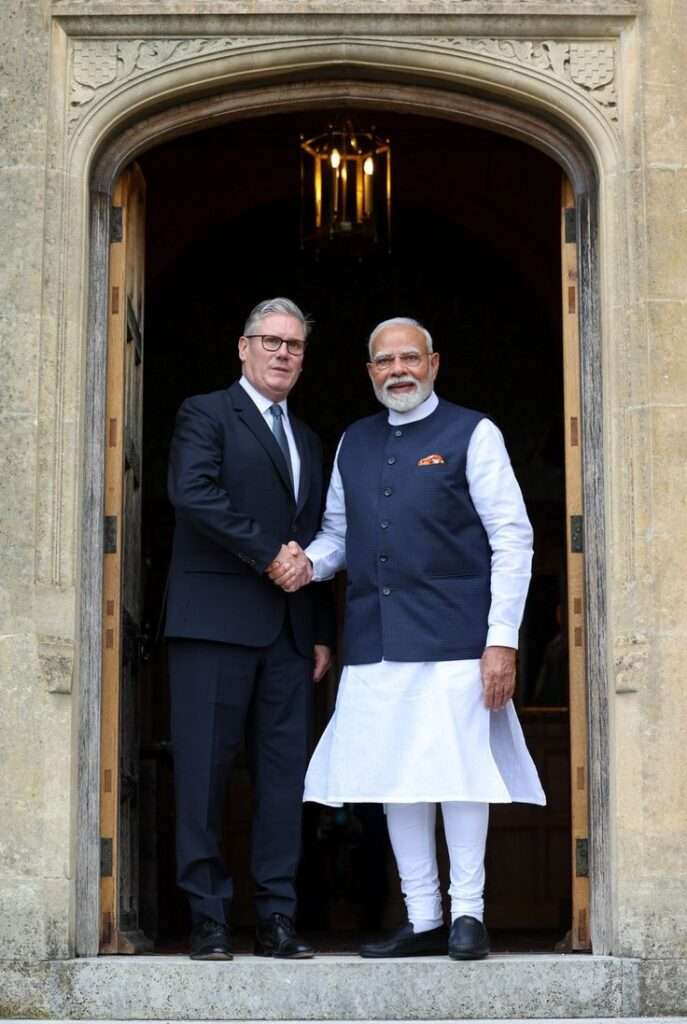
In a significant development for international relations, United Kingdom Prime Minister Keir Starmer is set to make his first official visit to India on October 8–9, 2025. The visit, at the invitation of Prime Minister Narendra Modi, marks a major milestone in strengthening the India–UK Comprehensive Strategic Partnership. This diplomatic engagement aims to enhance cooperation in trade, technology, defense, and innovation.
The visit comes at a pivotal moment, following the signing of the India–UK Comprehensive Economic and Trade Agreement (CETA) in July 2025. This agreement has set the stage for greater trade collaboration, including tariff reductions on textiles, whisky, and automobiles, while improving market access for businesses from both nations. During his visit, Prime Minister Starmer will meet Prime Minister Modi in Mumbai on October 9 to review the progress under the “Vision 2035” framework — a long-term roadmap for deepening bilateral ties. Both leaders are expected to discuss avenues to expand trade relations, investment opportunities, and strategic cooperation.
A key highlight of the trip will be Prime Minister Starmer’s participation in the 6th edition of the Global Fintech Fest in Mumbai. The event will gather policymakers, industry leaders, and innovators to discuss emerging trends in fintech and digital transformation. Both leaders are scheduled to deliver keynote addresses, signalling growing collaboration in technology, innovation, and digital trade between India and the UK.
Ahead of the visit, human rights groups have urged Prime Minister Starmer to address the case of Jagtar Singh Johal, a British Sikh detained in India since 2017 without trial. Advocacy groups stress that his continued detention raises legal and human rights concerns, which could affect India’s global image. This issue may influence the bilateral dialogue and is expected to be part of broader discussions on governance and human rights.
Prime Minister Keir Starmer’s visit to India is poised to be a landmark event in UK–India relations. It reflects a shared commitment to expanding economic cooperation, strengthening strategic ties, and fostering innovation. While trade and technology will be at the forefront, the visit also offers an opportunity to address human rights concerns, demonstrating the complexity and depth of modern diplomacy.

