Introduction
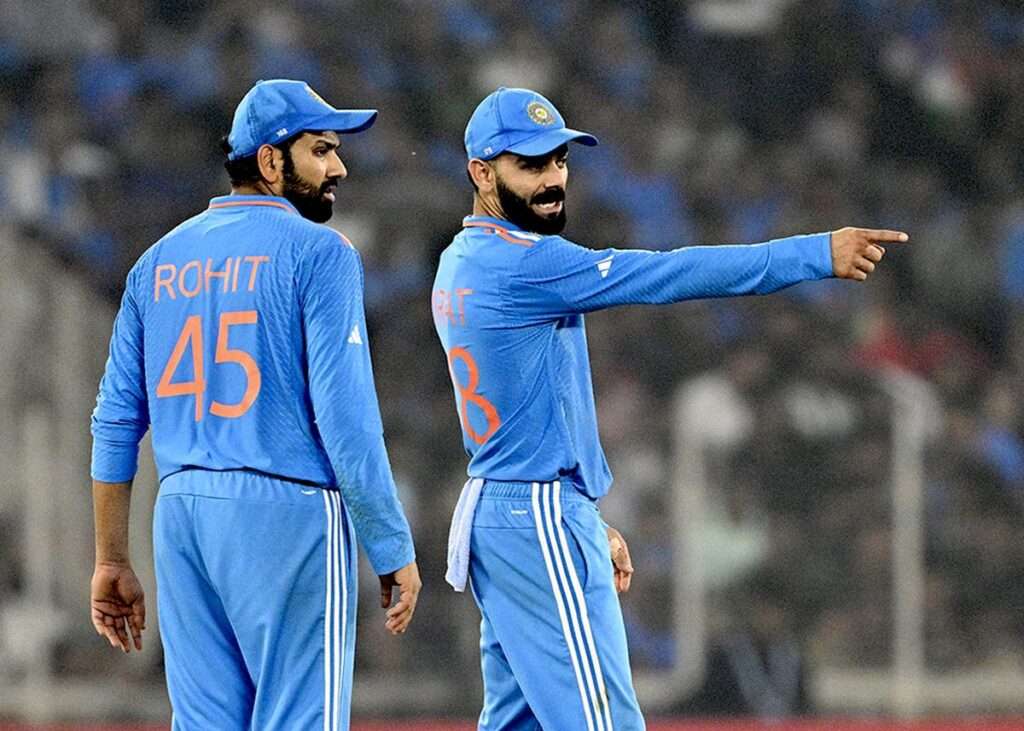
Former India cricketer and commentator Aakash Chopra has delivered a sharp message to cricketing icons Rohit Sharma and Virat Kohli, warning that sustaining consistency and class at the highest level may no longer be easy. His comment, “class won’t be that frequent,” has reignited debate over the future of India’s senior players in the limited-overs format as the team prepares for the next phase leading up to the 2027 ODI World Cup.
Body
Chopra’s Straightforward Opinion
In a recent discussion, Aakash Chopra highlighted that while talent remains intact, maintaining form and rhythm becomes increasingly difficult for players who no longer play across all formats. He noted that the reduced match exposure could affect their timing, mental sharpness, and overall performance. Chopra emphasized that both Rohit and Kohli, who now feature primarily in ODIs, may find it harder to deliver consistent match-winning performances compared to their peak years.
According to Chopra, regular competition keeps a player in rhythm, and stepping away from multiple formats can slow that momentum. His remarks underline the growing challenge faced by aging cricketers in staying match-ready amid long breaks between games.
Selection on Merit and India’s New Approach
Chopra’s statement comes at a time when the Board of Control for Cricket in India (BCCI) has reportedly decided to make team selection strictly merit-based, regardless of seniority. The new approach is in line with India’s roadmap for the 2027 ODI World Cup, focusing on fitness, form, and adaptability rather than past achievements.
Under the new management, every player—no matter how experienced—is expected to earn their spot through consistent performance. This signals a shift in Indian cricket’s philosophy, where emerging players are given greater opportunities, and even established stars are expected to justify their place in the side.
Challenges for Single-Format Players
Both Rohit Sharma and Virat Kohli have stepped back from Tests and T20Is to concentrate on ODIs. While this decision allows them to manage workload and fitness, it also reduces their competitive edge. Modern cricket demands constant adaptability, and staying in form becomes tougher with fewer matches.
Experts believe that reduced game time could make it difficult for them to adjust to varying conditions and high-pressure scenarios. Additionally, with young talents like Shubman Gill, Ruturaj Gaikwad, and Yashasvi Jaiswal pushing for regular places, the competition for top-order spots is fiercer than ever.
Cricketing Legacy vs. Future Readiness
There is no denying the monumental contributions of both Rohit and Kohli to Indian cricket. Their records speak for themselves — countless centuries, match-winning partnerships, and leadership milestones. However, as the game evolves, so do the expectations. Chopra’s remark serves as a reminder that reputation alone cannot guarantee selection or success in the long run.
Cricket analysts suggest that the duo must treat every match as a fresh test, showcasing their adaptability and hunger to perform. The upcoming ODI series will likely serve as a litmus test for both veterans, as selectors and fans watch closely to assess their current form.
Conclusion
Aakash Chopra’s candid observation — “class won’t be that frequent” — encapsulates the inevitable truth of modern cricket: even the greatest players must continuously prove their worth. For Rohit Sharma and Virat Kohli, this phase is not just about defending their legacy but redefining it. As India transitions toward the 2027 World Cup, their ability to stay relevant, consistent, and impactful will determine whether experience can still triumph over time.