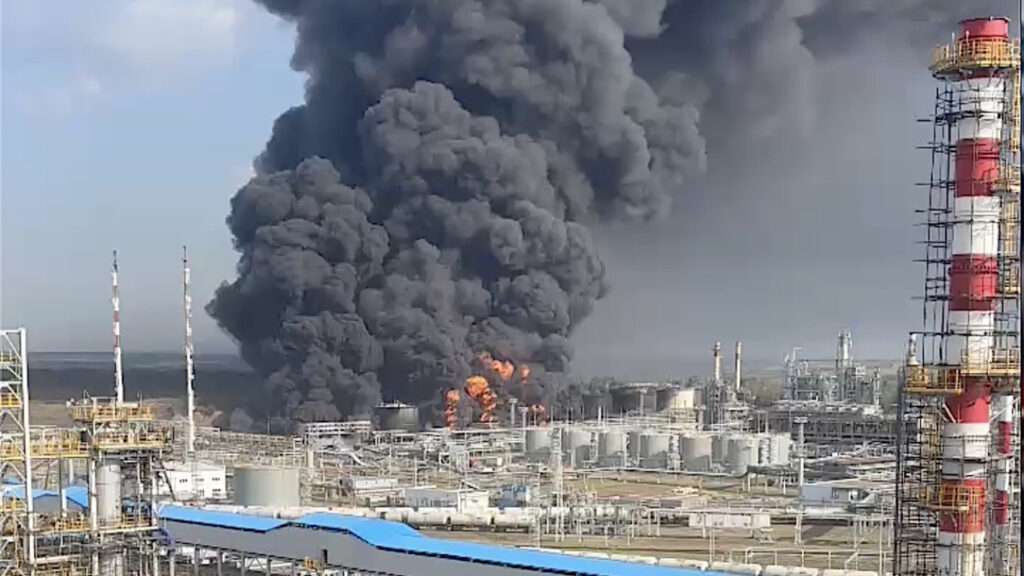
On October 19, 2025, a Ukrainian drone attack targeted Russia’s Orenburg gas processing plant, one of the world’s largest facilities of its kind. The strike ignited a significant fire and forced the plant to suspend its intake of natural gas from neighboring Kazakhstan. The Orenburg plant, operated by Gazprom, processes gas from both Russian and Kazakh fields and has an annual capacity of 45 billion cubic meters.
The attack has had a ripple effect on Kazakhstan’s energy sector. The Karachaganak oil and gas condensate field, a major source of Kazakhstan’s energy exports, has seen its output decline by 25% to 30% due to the disruption at the Orenburg facility. This drop in production is attributed to the halted processing of associated gas from Karachaganak at Orenburg. The field, operated by a consortium including Chevron, Shell, Eni, Lukoil, and KazMunayGaz, typically exports via the Caspian Pipeline and Russia’s Druzhba pipeline. Plans for a new gas processing plant at the field have been delayed as Kazakhstan now seeks new investors.
In response to the attack, Ukrainian President Volodymyr Zelenskyy called for increased global pressure on Moscow. He emphasized the importance of continued strikes on Russia’s energy sector and urged NATO countries to end their reliance on Russian oil, citing U.S. readiness to supply alternatives.
This incident is part of a broader pattern of Ukrainian attacks on Russian energy infrastructure aimed at undermining Moscow’s war capabilities. Since August, at least 18 Russian oil facilities have been targeted, contributing to a substantial decline in fossil fuel exports, now at their lowest since the war began.
The Orenburg attack also underscores the vulnerability of critical energy infrastructure in the ongoing conflict. As both sides continue to target each other’s energy assets, the broader implications for regional energy security remain significant.
While some operations at the Orenburg plant may resume, a timeline for full recovery is unclear. The incident highlights the interconnectedness of regional energy systems and the potential for cascading effects across borders.
As the conflict persists, the international community watches closely, with energy security emerging as a central concern in the geopolitical landscape.