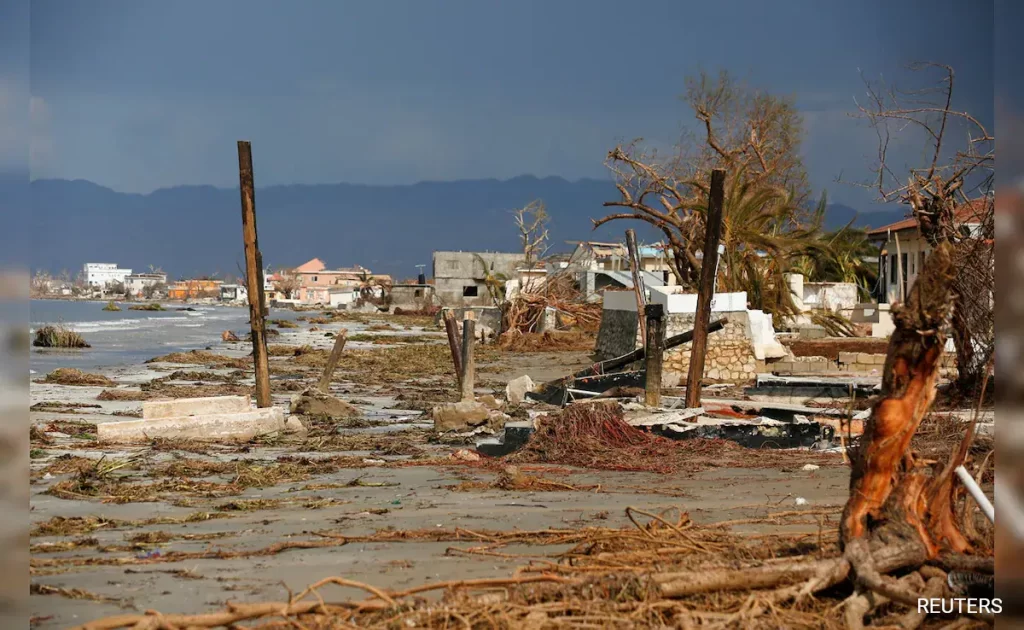
A devastating natural disaster has struck the Caribbean as Hurricane Melissa, a record-breaking storm, has already claimed dozens of lives and caused widespread destruction across multiple island nations. With its unprecedented intensity and duration, the hurricane is raising urgent questions about regional preparedness, climate change adaptation, and the scale of international humanitarian response.
Hurricane Melissa made landfall on October 28, 2025, in southwestern Jamaica with sustained winds estimated at 185 mph (298 km/h), making it the strongest hurricane ever to hit the island directly. Authorities in Jamaica confirmed at least 19 fatalities and began mobilising military and relief teams to reach isolated communities. Roads, bridges, and power infrastructure suffered catastrophic damage, leaving millions without access to electricity and clean water.
In Haiti, although the storm did not make direct landfall, catastrophic rainfall and overflowing rivers triggered deadly floods, particularly in the coastal town of Petit-Goâve. At least 30 people were confirmed dead and over 20 remained missing. Homes and crops were washed away, worsening the humanitarian crisis in a nation already battling political instability and food shortages. Meanwhile, Cuba evacuated more than 700,000 residents from its eastern provinces ahead of the storm’s arrival. Although no deaths were initially reported, extensive damage to homes, roads, and farmlands was observed.
The economic toll of Hurricane Melissa is staggering. Preliminary estimates suggest that damage across the region could reach between 48 billion and 52 billion USD, with Jamaica suffering the most severe losses, particularly in tourism and public infrastructure. Power outages remain widespread, with more than 70 percent of Jamaica’s electricity network down following the storm’s passage. Telecommunications and transportation networks were also severely disrupted, hindering relief operations.
Experts have highlighted Melissa’s strength and longevity as a troubling sign of evolving climatic patterns. Meteorologists from the National Hurricane Center noted that the storm’s slow movement compounded destruction, as it lingered over affected regions for several hours. Scientists warn that warming ocean temperatures are likely contributing to stronger and more destructive hurricanes in the Atlantic basin. Caribbean leaders are urging wealthy nations to expand climate financing and “loss and damage” funds, arguing that the region is paying a disproportionate price for a crisis it did little to cause.
Relief and rescue efforts are now underway but remain challenging due to extensive infrastructure damage. In Jamaica, airports and seaports are gradually reopening to allow humanitarian flights and shipments of food, water, and medical supplies. However, many rural roads remain blocked by fallen trees and landslides. In Haiti, humanitarian access is further complicated by ongoing instability and poor road conditions, while in Cuba, the military has deployed heavy machinery to clear debris and restore communication lines.
Hurricane Melissa stands as one of the most powerful storms in Caribbean history and a grim reminder of the growing threat of climate-amplified natural disasters. With at least 49 confirmed deaths across Haiti and Jamaica and many more still unaccounted for, the human toll continues to rise. The path to recovery will be long and costly, demanding coordinated international support, resilient rebuilding strategies, and renewed attention to disaster preparedness. As the storm moves north and weakens into an extratropical cyclone, the scars it leaves behind serve as a stark warning of the planet’s increasingly volatile climate future.