
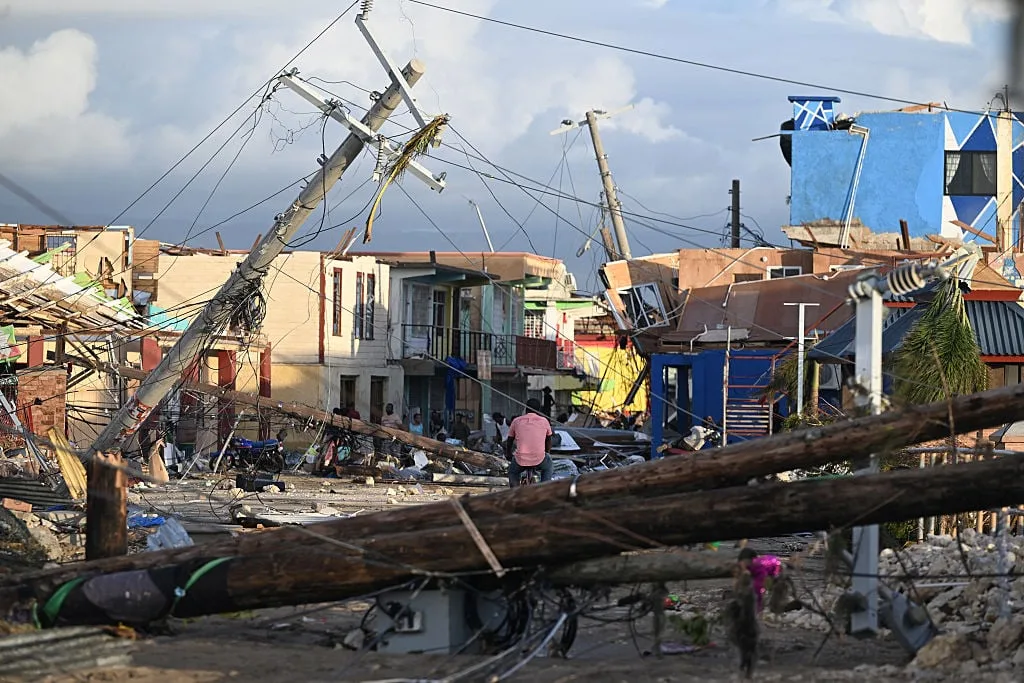
Hurricane Melissa, which made landfall in Jamaica as an unprecedented Category 5 storm on October 28, 2025, has left a trail of destruction across the Caribbean, with widespread damage, mass displacement, and a mounting death toll. The storm has plunged entire communities into isolation, triggered urgent appeals for international assistance, and raised concerns about the accelerating risks of climate-driven disasters.
Melissa struck southwestern Jamaica near New Hope with sustained winds estimated at 185 mph (295 km/h), making it the strongest storm on record to directly hit the island. The hurricane carved a path of ruin—towns such as Black River saw up to 90 percent of roofs torn off, and structural damage was described as apocalyptic. More than 60 percent of Jamaica’s power grid remains offline, and nearly half of the nation’s water systems have been disrupted.
Authorities have confirmed at least 49 fatalities across the Caribbean, though the toll is expected to rise as search and rescue operations reach remote areas. In Jamaica alone, 19 deaths have been officially recorded, with additional unverified reports pending confirmation. Haiti, battered by torrential rains and landslides from Melissa’s slow approach, has reported over 30 deaths and dozens missing. Meanwhile, Cuba, though spared major loss of life, has sustained severe structural and agricultural damage.
Thousands of people have been displaced across the region, with entire neighborhoods cut off by flooding, debris, and damaged infrastructure. More than 700,000 children are estimated to be affected by the hurricane’s impact. In many Jamaican parishes, communities remain unreachable due to downed roads and collapsed bridges. Humanitarian agencies report that many survivors are without basic necessities such as food, clean water, and shelter, and the threat of waterborne diseases is rising rapidly.
Jamaica’s catastrophe bond, issued in 2024 to provide financial support following natural disasters, has been triggered to mobilize emergency funds for recovery. Officials, however, have urged donors to channel aid through government-approved pathways to ensure accountability and prevent fraud.
Meteorologists suggest that Melissa’s rare intensity and extremely slow forward motion—barely a few miles per hour—magnified its destructive impact by prolonging rainfall over vulnerable regions. Many Caribbean leaders and climate advocates are linking Melissa to broader patterns driven by warming ocean temperatures and shifting atmospheric conditions, warning that future hurricanes may grow stronger and more persistent.
Regional governments, the United Nations, and international NGOs are coordinating relief operations. Emergency aid flights have begun arriving in Kingston, while military personnel have been deployed for search, rescue, and reconstruction efforts. Jamaica is also calling for debt relief and increased climate financing from wealthier, high-emitting nations to aid in long-term recovery.
Hurricane Melissa has inflicted one of the most severe disasters in Caribbean history, particularly in Jamaica, where entire communities remain isolated and residents are in desperate need of life-saving aid. As recovery begins, restoring infrastructure, preventing secondary health crises, and mobilizing sustained global support will be critical. The catastrophe underscores the urgency for decisive climate action, resilient infrastructure planning, and equitable funding mechanisms to help the region confront escalating storm risks.

