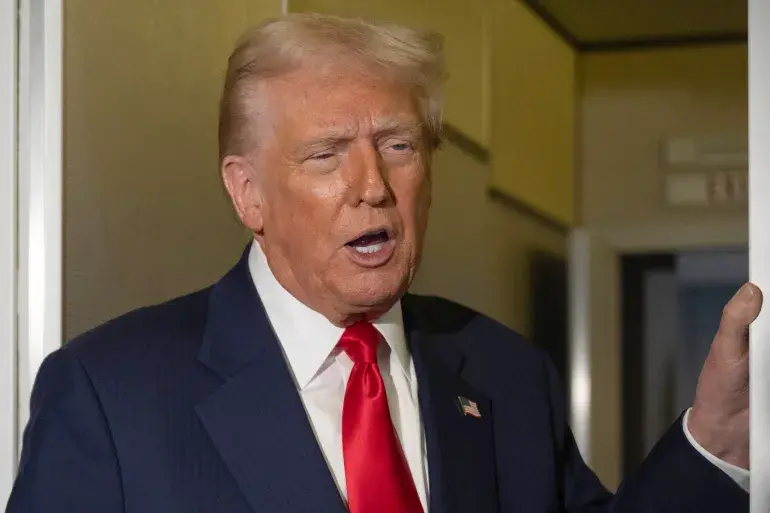
In a striking turn in international discourse, U.S. President Donald Trump claimed in a televised interview that multiple countries — including Pakistan, China and Russia — are secretly conducting nuclear weapons tests. He asserted that the United States must respond by resuming its own testing. These claims have ignited a flurry of diplomatic denials, expert skepticism and alarm at the potential erosion of longstanding nuclear test-moratorium norms.
In the interview with the CBS programme “60 Minutes”, President Trump stated that “Russia’s testing, and China’s testing … you don’t necessarily know where they’re testing. They test way underground where people don’t know exactly what’s happening with the test.” He included Pakistan in the list of nations allegedly conducting clandestine nuclear trials.
Following the remarks, China’s foreign ministry swiftly rejected any such tests, reaffirming its commitment to a nuclear-testing moratorium and its “no first use” policy. Beijing called on Washington to “take concrete actions to safeguard the international nuclear disarmament and non-proliferation regime”. Meanwhile, Pakistan publicly declared that it “will not be the first to resume nuclear tests”, emphasising that its past nuclear tests were voluntary and that it remains committed to not initiating new detonations.
Experts in nuclear non-proliferation and arms control note that while the U.S. has not conducted a full-scale nuclear detonation since 1992 under the voluntary moratorium, allegations of “super-critical” or low-yield tests remain unverified in the public domain. President Trump’s remarks coincided with his directive to the U.S. military to resume nuclear-weapons testing “on an equal basis” with rivals — prompting concerns that the delicate balance of the global testing-ban regime may be under strain.
The geopolitical ramifications are significant. If substantiated, secret nuclear testing by major powers would undermine the Comprehensive Nuclear-Test-Ban Treaty (CTBT) norms, even though the treaty has not yet entered into force. Diplomatic trust among nuclear states would degrade, and neighbouring regions — notably South Asia — could see heightened arms-race pressures. The U.S.’s possible pivot back to testing has triggered concerns from analysts about a new era of strategic instability.
President Trump’s allegations of secret nuclear tests by Russia, China and Pakistan mark a major inflection point in global nuclear discourse. With the involved nations rejecting the claims and experts calling for greater evidence, the episode raises profound questions about transparency, deterrence and the credibility of existing non-proliferation frameworks. As the U.S. signals a renewed willingness to test its arsenal — albeit with system-level rather than full-scale detonations — the international community may find itself at an uneasy juncture: staying the course on decades-old moratoriums, or entering a renewed spiral of nuclear competition. The implications for global strategic stability, arms control treaties and regional security remain deeply uncertain.