
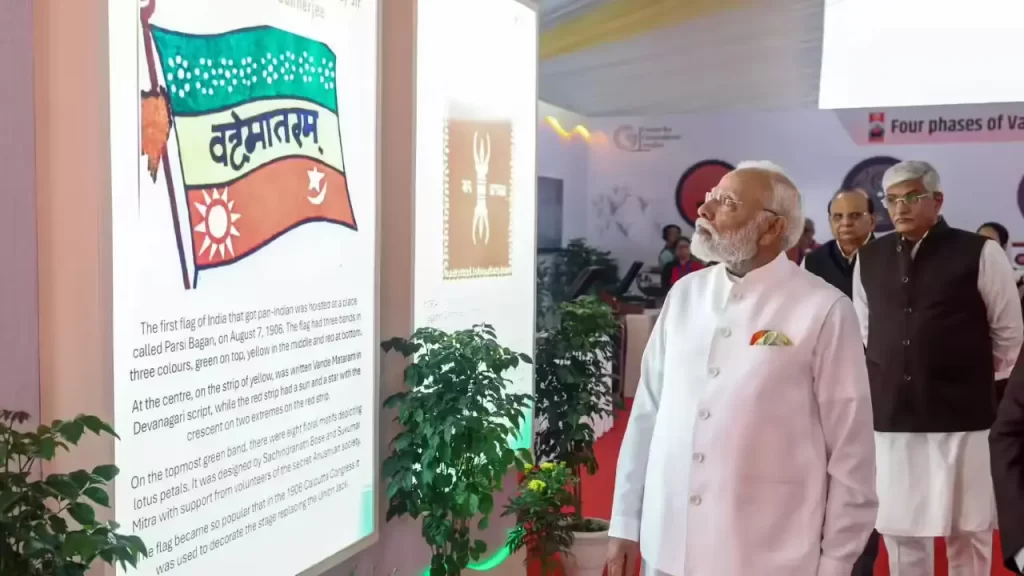
On 7 November 2025, the nation marked a significant milestone as Prime Minister Narendra Modi officially launched the year-long nationwide commemoration of the 150th anniversary of the national song “Vande Mataram”. The event, held at the Indira Gandhi Indoor Stadium in New Delhi, featured the release of a commemorative stamp and coin, setting the tone for celebrations running through to 7 November 2026.
The song “Vande Mataram”, written by Bankim Chandra Chatterjee on the auspicious day of Akshaya Navami, 7 November 1875, first appeared in his novel Anandamath via the literary journal Bangadarshan. Over the decades, the composition has transcended its literary origins to become a powerful symbol of India’s freedom movement and national unity.
At the inauguration ceremony, Prime Minister Modi described the song as “a mantra, an energy, a dream, and a devotion to Mother India,” asserting that it embodies the very ideological force behind the concept of India. He highlighted that the full version of the song will be sung en masse across public venues at 10:00 AM on 7 November, with participation invited from citizens, students, teachers, officials, and other stakeholders nationwide.
The release of the commemorative stamp and coin serves not only as a tribute to the song’s legacy but also as a tangible marker of the government’s intent to embed the song’s spirit in the public consciousness and civic culture. Across states and union territories, celebrations are being organised in varied formats — mass singing, exhibitions, cultural programmes, and youth-engagement initiatives.
Beyond commemoration, the campaign emphasises the renewal of civic values such as unity, self-reliance and national pride. In his address, Modi recalled India’s past glory — from pre-colonial wealth to foreign domination — and credited the song with galvanising a nation to strive again for dignity and self-respect.
However, the journey is not without debate. In Maharashtra, for instance, a controversy has arisen as some legislators raised objections to mandatory recitation of the song in the context of diverse beliefs. Such discussions underscore the evolving place of “Vande Mataram” in a pluralistic society and its role in shaping collective identity.
The commencement of the year-long celebration for 150 years of “Vande Mataram” signals more than just a historic anniversary—it reflects India’s continuing effort to reaffirm its cultural heritage and national consciousness. As the commemorative stamp and coin circulate, and mass singing resonates nationwide, the initiative aims to engage citizens of all ages and backgrounds in the spirit of unity, remembrance and renewal. By bridging the past and the present, the commemoration invites the nation to consider how a song born in the 19th century remains relevant for 21st century India.

