
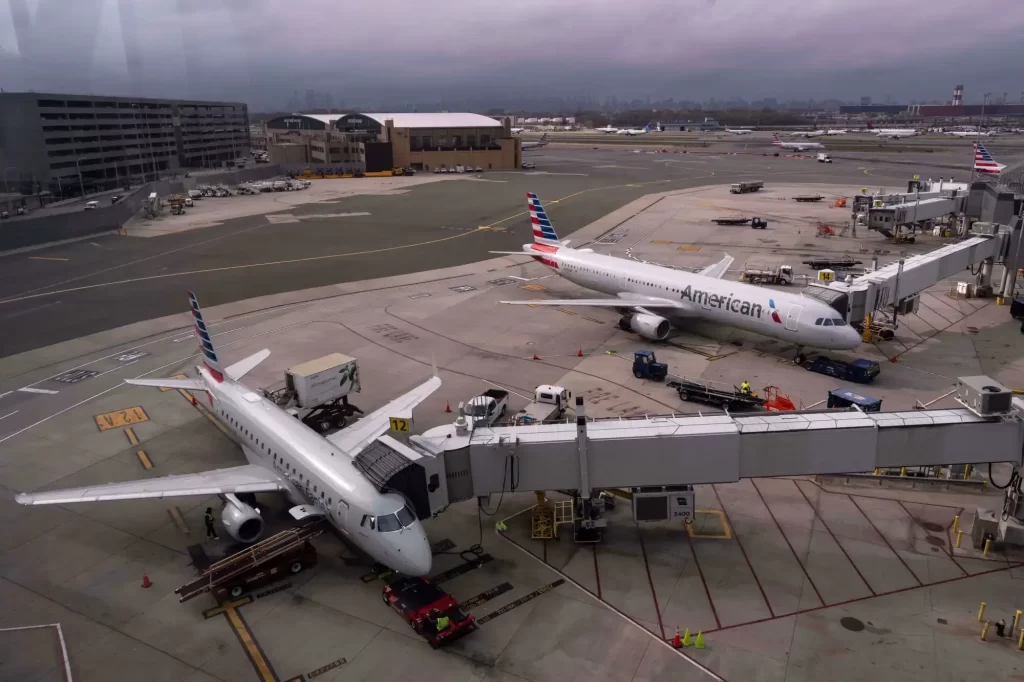
As of November 10, 2025, U.S. airlines are facing an unprecedented wave of flight cancellations, with more than 2,000 flights grounded daily due to the ongoing federal government shutdown. The shutdown has triggered a severe staffing shortage among air traffic controllers, disrupting operations across major airports and leaving thousands of passengers stranded nationwide.
The crisis, now in its third week, stems from the failure of Congress to pass a new federal spending bill, resulting in the furlough of non-essential government employees and the suspension of pay for critical aviation personnel. Although many air traffic controllers continue to work without pay, growing fatigue, stress, and absenteeism have led to mounting delays and cancellations across the country’s busiest hubs — including Atlanta, Chicago, Dallas, and New York.
Airlines such as American Airlines, Delta, and United have confirmed widespread disruptions, citing “operational constraints” caused by the staffing crisis at the Federal Aviation Administration (FAA). In a joint statement, the carriers urged the federal government to “act swiftly to restore normalcy to the national airspace system” and warned that the situation could worsen if the shutdown extends further.
The FAA, operating with a skeletal workforce, has temporarily reduced air traffic capacity at several major airports. According to agency officials, at least eight airports — including Los Angeles International, Hartsfield-Jackson Atlanta, and O’Hare — are under “flow management” restrictions to maintain safety amid reduced staffing levels. Flights are being delayed or rerouted to ensure compliance with safety standards, further intensifying the travel chaos.
Transportation Secretary Pete Buttigieg described the ongoing situation as “unsustainable,” emphasizing that prolonged unpaid work for critical staff poses significant risks to aviation safety and efficiency. “Air traffic controllers are performing one of the most stressful jobs in America,” Buttigieg noted. “Expecting them to do so indefinitely without pay is unacceptable and dangerous.”
Industry analysts estimate that the economic cost of the daily cancellations could surpass $150 million, factoring in lost revenue, passenger compensation, and ripple effects across the travel and tourism sectors. The U.S. Travel Association has warned that continued disruptions could dampen holiday travel demand, traditionally one of the busiest periods for domestic airlines.
Meanwhile, passengers have taken to social media to express frustration over long lines, abrupt cancellations, and limited communication from airlines. Some airports have set up temporary assistance centers to accommodate stranded travelers, though many have been left scrambling to find alternative routes.
Lawmakers remain locked in partisan negotiations over the federal budget, with no clear timeline for a resolution. Until then, the aviation sector is bracing for continued turbulence. Analysts warn that if the shutdown persists into late November, the FAA may be forced to mandate additional flight reductions of up to 20 percent nationwide.
For millions of travelers and industry stakeholders, the government shutdown’s impact on air travel underscores the deep interconnection between political gridlock and national infrastructure. As airlines continue to cancel thousands of flights daily, the skies over America remain a symbol of both operational strain and political stalemate.

