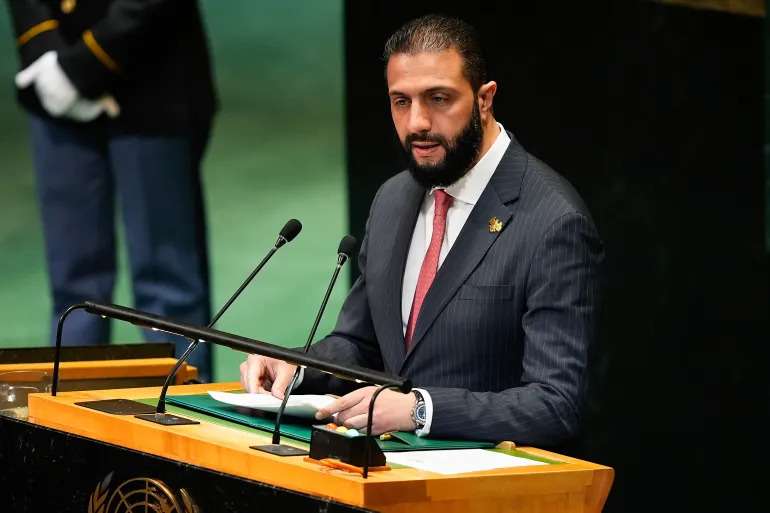
In a landmark diplomatic move, Syrian President Ahmed al-Sharaa arrived in Washington D.C. on Monday, November 10, 2025, to meet U.S. President Donald Trump at the White House — the first-ever official visit by a Syrian head of state since Syria’s independence in 1946. With the bilateral agenda centered on sanctions relief, Syria’s integration into the U.S.-led anti-terror coalition, and the reconstruction of war-torn Syria, the summit signals a dramatic turnaround in U.S.–Syria relations and opens a new chapter in Middle East diplomacy.
President al-Sharaa’s visit follows sweeping shifts in Syria’s international standing. The United States recently removed him from its Specially Designated Global Terrorist list, and the United Nations Security Council voted unanimously, with one abstention, to lift sanctions on him and top government officials, clearing the way for high-level engagements between the two nations.
Key issues on the table for al-Sharaa include the full repeal of the Caesar Syria Civilian Protection Act, which imposes heavy sanctions on Syria for human rights abuses and the previous regime’s conduct. President Trump has already waived many sanctions, but Congressional action is still required to abolish the Caesar Act permanently.
Another major component of the talks is Syria’s anticipated entry into the U.S.-led coalition to fight the Islamic State (IS). Analysts say that such a move would symbolize Syria’s exit from isolation and signal a shift away from Iran- and Russia-led influence toward alignment with Western and Gulf diplomacy.
The transformation of Ahmed al-Sharaa himself is striking. Once the leader of rebel Islamist forces who overthrew the longtime rule of Bashar al-Assad in December 2024, and formerly designated by the U.S. as a “terrorist,” al-Sharaa has since repositioned himself as Syria’s interim leader, seeking reconstruction, reconciliation, and reintegration into the global community.
However, despite the optimism, significant challenges remain. Humanitarian, governance, and minority rights concerns continue to plague Syria’s transition. The speed of reconstruction—estimated by the World Bank to require over USD 200 billion—and questions over how inclusive the new government will be remain open. Many observers caution that normalization with Washington must be accompanied by tangible reforms within Syria to ensure sustainable peace and accountability.
The Washington summit between President Trump and President al-Sharaa marks a watershed moment in Syria’s foreign policy and U.S. engagement in the region. By boldly addressing sanctions relief, counter-terror cooperation, and reconstruction, both sides are signaling a pragmatic reset. Yet, the success of this pivot will depend on concrete action in Congress, the effectiveness of anti-IS collaboration, and whether Syria’s internal reforms meet international expectations. This meeting could herald a new era for Syria — if the promises made today translate into durable change.