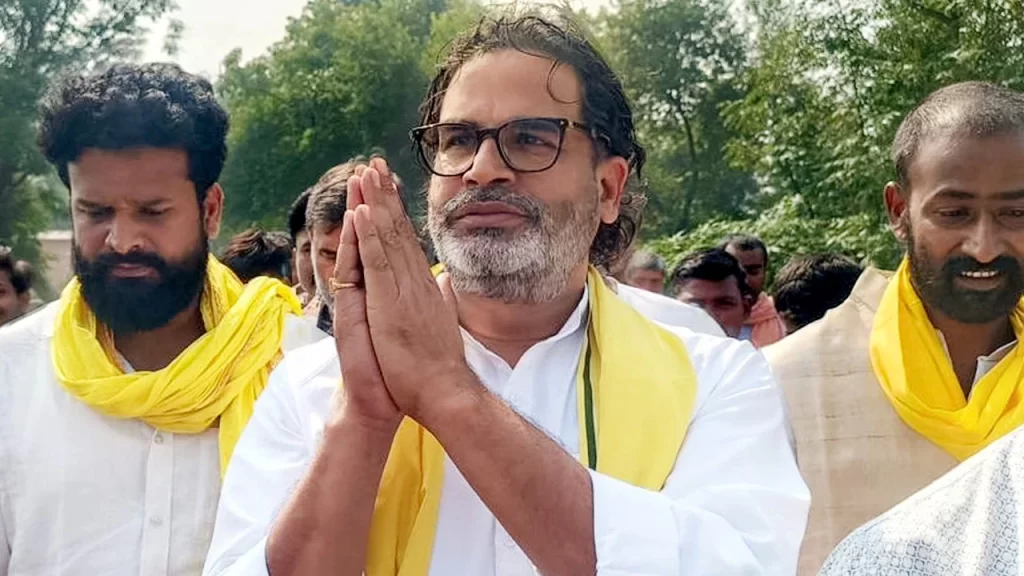
Exit polls for the Bihar Assembly elections, conducted in November 2025, have indicated a decisive victory for the ruling National Democratic Alliance (NDA), led by Chief Minister Nitish Kumar and supported by the Bharatiya Janata Party (BJP). The surveys suggest that the NDA is set to secure a comfortable majority in the 243-member Assembly, while the opposition Mahagathbandhan (Grand Alliance) appears to be losing ground. Political analyst Prashant Kishor’s newly launched Jan Suraaj Party (JSP) is projected to win only a handful of seats, marking a modest start in its debut electoral contest.
According to various exit poll projections, the NDA is expected to win between 140 and 160 seats, giving it a clear edge over the opposition alliance. The Mahagathbandhan, comprising the Rashtriya Janata Dal (RJD), Congress, and Left parties, is predicted to secure between 70 and 90 seats, while smaller regional outfits and independents are expected to share the remaining seats. The results will be officially declared after the counting of votes on November 14, 2025.
Analysts suggest that the NDA’s advantage stems from a combination of factors, including Nitish Kumar’s governance record, welfare initiatives targeting women and rural voters, and strong organizational support from the BJP. The government’s focus on infrastructure, law and order, and public welfare schemes has resonated with a section of the electorate, especially in rural and semi-urban constituencies.
In contrast, the Mahagathbandhan struggled to consolidate its vote base amid leadership disputes and lack of a unified campaign narrative. The RJD’s Tejashwi Yadav attempted to revive the party’s traditional support among youth and backward communities, but analysts believe the NDA’s coordinated strategy and development messaging proved more effective in swaying voters.
For Prashant Kishor, who entered active politics after years of election strategy consulting, the Bihar elections were seen as a litmus test for his political credibility. Despite extensive grassroots campaigning under the banner of Jan Suraaj, the exit polls indicate limited success. Experts suggest that while the JSP has succeeded in creating visibility in select pockets, it may take more electoral cycles to establish itself as a formidable force in the state’s political landscape.
The elections, spread across multiple phases in early November, witnessed moderate voter turnout, with rural areas recording higher participation compared to urban constituencies. Issues such as employment, inflation, and education were among the top voter concerns, although regional loyalty and local leadership continued to play a decisive role in shaping outcomes.
As Bihar awaits the final results on November 14, political observers caution that exit polls, while indicative, are not always conclusive. The actual outcome will determine whether Nitish Kumar secures another term in office and whether Prashant Kishor’s Jan Suraaj movement can translate its grassroots momentum into tangible political gains.