
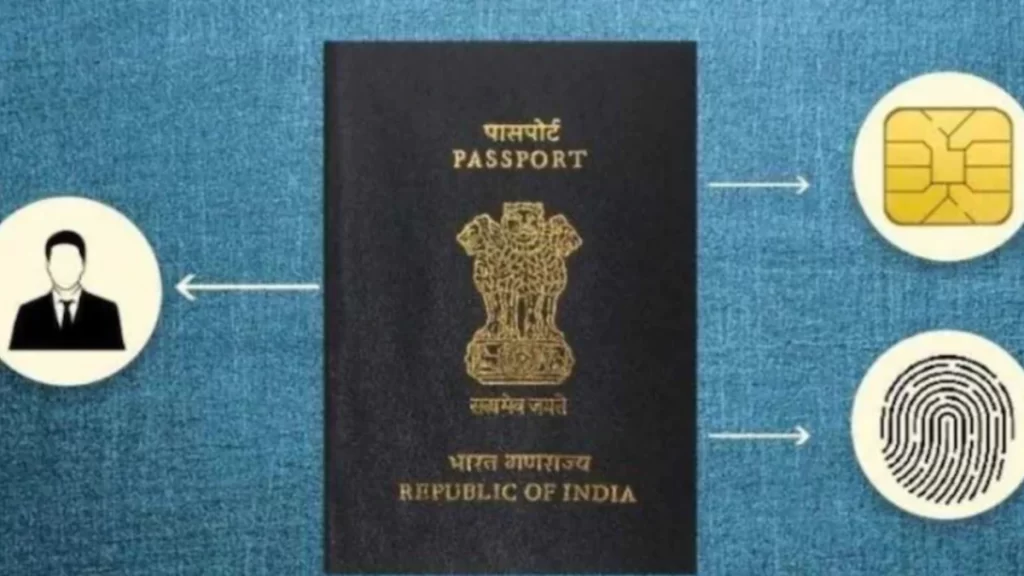
In a landmark move, India has successfully implemented a full national rollout of e‑passports as part of its upgraded Passport Seva Programme Version 2.0 (PSP V2.0). The Ministry of External Affairs (MEA) announced on November 13, 2025, that all new passports issued henceforth will feature embedded RFID chips, marking a major modernization in India’s travel documentation system.
Secure, Smart, Seamless: What the Upgrade Means
The newly introduced e‑passports are “hybrid” booklets—in appearance familiar, but under the cover far more advanced. Each passport now embeds a Radio Frequency Identification (RFID) chip and antenna, which securely stores biometric and personal data such as photographs, fingerprints, and other identity details. The encrypted data complies with International Civil Aviation Organization (ICAO) standards, strengthening identity verification and reducing the risk of forgery.
Beyond the physical passport, PSP V2.0 introduces a digitally integrated ecosystem that connects 37 Passport Offices, 93 Passport Seva Kendras (PSKs), and 450 Post Office Passport Seva Kendras (POPSKs) across India. The Global version—GPSP V2.0—was also launched on October 28, 2025, to extend the benefits of this system to Indian citizens abroad.
Key Enhancements Under PSP V2.0
Some of the most significant features introduced under the upgraded programme include:
- AI-powered assistance: Chatbots and voice bots help users fill out forms, resolve queries, and check application status in real time.
- Improved user experience: The Passport Seva website and mobile app now support auto-filled application forms, simpler document upload workflows, and payments via UPI or QR code.
- Faster immigration checks: Owing to the contactless chip, e-passports enable quicker identity validation at immigration counters, helping speed up cross-border travel.
Clarifying Validity: Old Passports Still Useable
A critical point emphasized by the MEA: existing traditional (non‑chip) passports remain valid until their printed expiry date. There is no immediate mandate for holders of older passports to switch to the new e‑passport—though the upgrade will become automatic when they renew.
This clarification comes amid concerns that some agents may be spreading misinformation, pressuring passport holders to apply for e-passports even when their current ones remain valid.
Strategic and Long-Term Impact
The rollout of PSP V2.0 and e‑passports underscores India’s commitment to digital transformation, citizen-centric governance, and adherence to global security standards. With this upgrade:
- Passport services become more secure, reducing document fraud via tamper-resistant technology.
- Efficiency gains through AI and integrated systems help reduce turnaround times and boost user convenience.
- Indian citizens traveling abroad benefit from faster immigration processing, especially in countries that support RFID‑enabled passport gates.
- The upgrade strengthens India’s infrastructure for the future, laying the groundwork for a fully digitized, globally aligned, and resilient passport service network.
Looking Ahead
As the e‑passport system matures, the MEA will likely continue refining PSP V2.0, reinforcing digital support, rolling out further training, and optimizing issuance across all consulates and missions. For citizens, the transition promises a more secure, streamlined travel document designed for the challenges of modern international mobility.
India’s completion of the nationwide e‑passport rollout stands as a defining moment for its diplomatic infrastructure—one that blends tradition with cutting-edge technology, reinforcing trust in state services and strengthening global connectivity.

