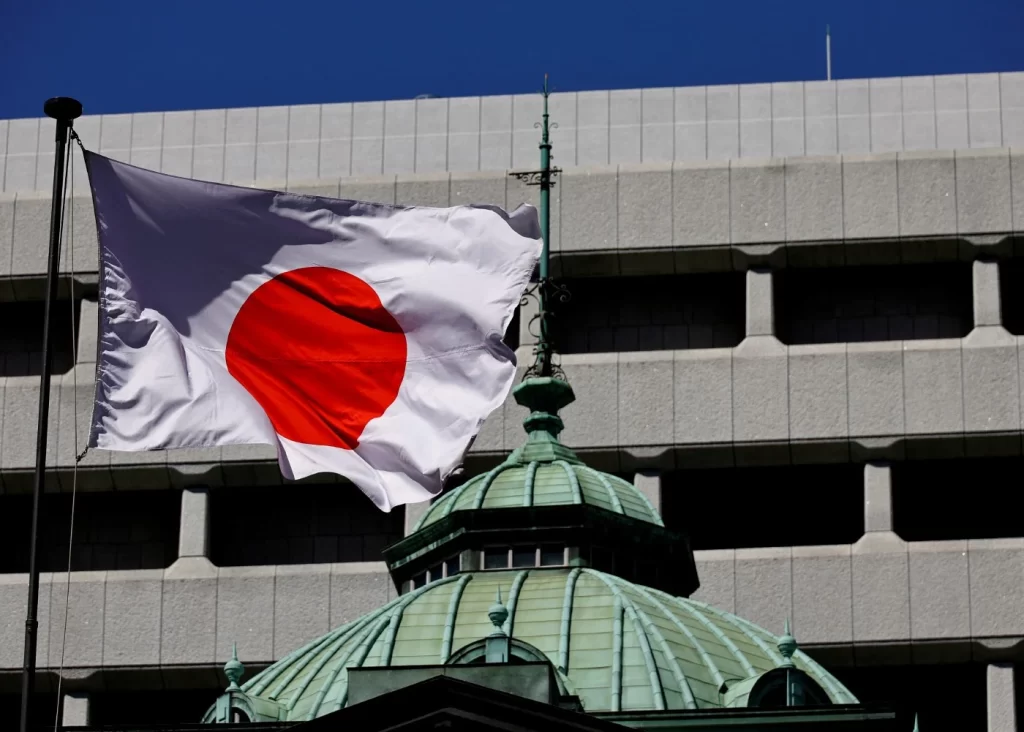
Japan’s economy shrank for the first time in six consecutive quarters during the July–September 2025 period, contracting at an annualised rate of 1.8% and slipping 0.4% quarter-on-quarter. The downturn was driven primarily by a steep fall in exports, following higher U.S. tariffs that weighed heavily on the nation’s crucial automobile sector. Despite the setback, economists emphasise that the contraction is less severe than anticipated and may represent a temporary slowdown rather than a prolonged recession.
Exports Drive the Economic Slide
Exports were the most significant drag on Japan’s third-quarter performance. Shipments of automobiles—one of Japan’s most important export categories—declined sharply due to the imposition of elevated U.S. import duties. The auto industry, which had previously accelerated exports ahead of the tariff implementation, saw demand weaken in the aftermath. As a result, net external demand subtracted from overall GDP growth, reversing the positive contribution observed in the previous quarter.
In addition to auto exports, other goods categories also experienced slower momentum, with manufacturers citing reduced overseas orders and cautious global market sentiment. Export-dependent industries have been working to recalibrate supply chains amid growing global trade tensions, adding further pressure on short-term growth.
Domestic Demand Shows Mixed Signals
While external demand weakened, domestic economic indicators provided a more mixed picture. Private consumption increased only marginally, rising 0.1% compared to the 0.4% growth recorded in the previous quarter. Analysts attribute this slowdown to rising living costs and cautious household spending, despite steady improvements in wages earlier in the year.
Housing investment recorded a notable decline, partly due to tougher energy-efficiency building regulations introduced in April. The updated guidelines increased construction costs, slowing new housing activity and affecting overall domestic demand.
However, capital expenditure offered a bright spot in an otherwise subdued quarter. Corporate investment expanded by 1.0%, outperforming market expectations and signalling continued business confidence in long-term economic prospects.
Government Prepares Major Stimulus Measures
In response to the economic downturn, Prime Minister Sanae Takaichi’s administration is preparing a significant stimulus package aimed at boosting household purchasing power and strengthening domestic demand. The planned measures, expected to exceed ¥17 trillion, will focus on income support, business incentives, and targeted relief for industries most affected by international trade disruptions.
Economists believe that if implemented effectively, the stimulus could help Japan regain growth momentum in the final quarter of 2025.
Monetary Policy Outlook Remains Uncertain
The contraction poses a strategic challenge for the Bank of Japan. With inflation still higher than policymakers would prefer, the central bank faces the delicate task of balancing price stability with economic support. The latest GDP figures may prompt the BOJ to delay any further interest-rate hikes, as tightening policy amid weakening growth could risk broader economic strain.
Private-sector forecasts, however, suggest that Japan may rebound modestly in the October–December quarter, with projections indicating around 0.6% growth if exports stabilise and stimulus measures take effect.
Japan’s Q3 2025 Economic Snapshot
| Indicator | Q3 Result | Notes |
|---|---|---|
| Annualised GDP Growth | –1.8% | First contraction in six quarters |
| Quarter-on-Quarter GDP | –0.4% | Growth momentum weakened |
| Export Contribution to GDP | Negative | Impacted by higher U.S. tariffs |
| Private Consumption Growth | +0.1% | Slower than previous quarter |
| Housing Investment | Decline | Affected by new regulations |
Japan’s third-quarter contraction underscores the nation’s vulnerability to global trade shifts, especially in export-reliant sectors such as automobiles. While the latest figures highlight short-term economic pressure, analysts maintain that the decline is driven largely by identifiable external shocks rather than systemic weakness. With government stimulus on the horizon and business investment holding firm, Japan may yet regain its growth trajectory heading into 2026.