
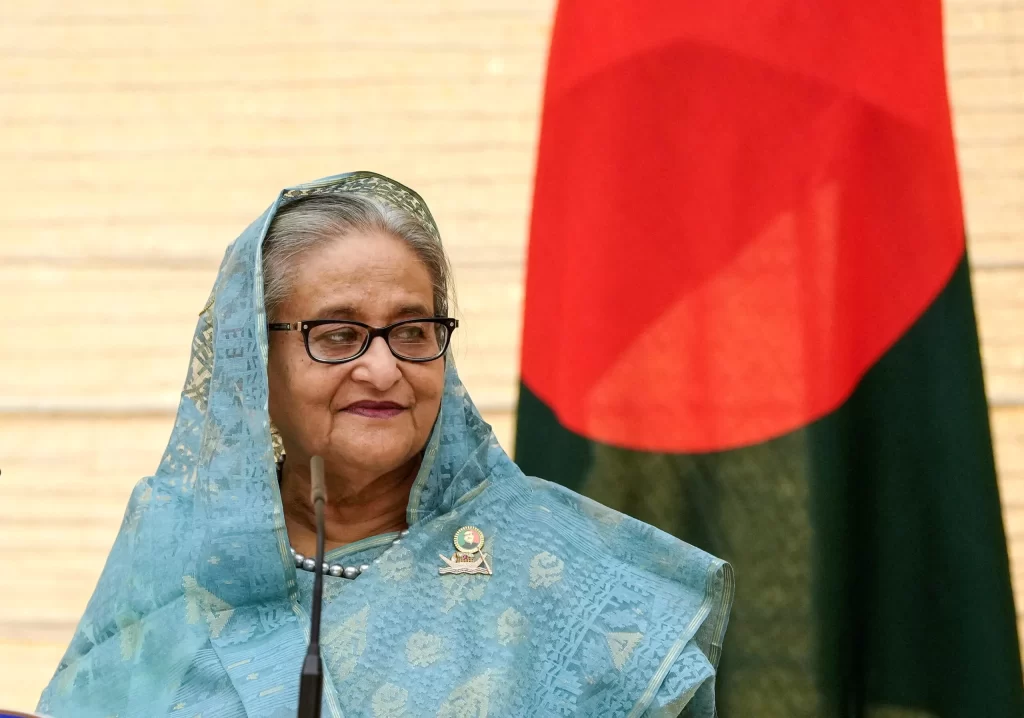
In a dramatic escalation of Bangladesh’s ongoing political turmoil, former Prime Minister Sheikh Hasina was sentenced to death in absentia on November 17, 2025, after the International Crimes Tribunal found her guilty of crimes against humanity linked to the violent suppression of student-led protests in mid-2024. The ruling has triggered nationwide debate, intensified political divisions, and drawn significant global attention.
A Landmark Verdict in a Deeply Polarised Nation
The three-judge tribunal held Hasina responsible for authorizing a brutal crackdown on the 2024 uprising, which erupted after months of unrest over alleged corruption, authoritarian governance, and rising economic distress. The judges concluded that security forces, acting under her command, used lethal weapons, drones, and aerial surveillance against protesters, resulting in widespread casualties.
The tribunal convicted Hasina on multiple charges, including incitement to violence, ordering extrajudicial killings, and failure to prevent human rights abuses. She received two death sentences and an additional life imprisonment term on separate counts.
Former Home Minister Asaduzzaman Khan was also sentenced to death, while the former police chief received a reduced five-year sentence after cooperating with investigators. The ruling marks one of the most consequential judicial decisions in Bangladesh’s recent history.
Hasina’s Response from Exile
Speaking from her place of refuge in India, Hasina dismissed the verdict as politically motivated and claimed the tribunal operated under an interim government lacking “democratic legitimacy.” She argued that she was denied a fair defense and reiterated her stance that the proceedings were orchestrated by political rivals determined to erase her legacy.
Her party, the Awami League, condemned the ruling as a “judicial witch-hunt,” asserting that no independent inquiry was conducted into the events of 2024 and that the charges were built on coerced testimonies and incomplete evidence.
Human Rights and Global Reactions
International human rights organisations expressed deep concern over the verdict. Many highlighted that trials conducted in absentia often fail to meet established standards of fairness and due process. The use of the death penalty—especially in politically charged cases—has drawn strong criticism from global advocacy groups.
The United Nations previously estimated that the 2024 student uprising resulted in as many as 1,400 deaths, most of them young protesters. The tribunal’s ruling also directs the government to compensate victims’ families, though the mechanism for implementing this requirement remains uncertain.
Diplomatically, the verdict has caused unease in the region. Bangladesh has renewed calls for India to extradite Hasina, while New Delhi has maintained a cautious stance, emphasizing due process and regional stability.
Key Elements of the Tribunal’s Decision
| Issue | Significance |
|---|---|
| Accountability | Aims to bring justice for victims of the 2024 crackdown. |
| Political Impact | Deepens polarization ahead of the 2026 national elections. |
| International Scrutiny | Raises questions about due process and human rights compliance. |
| Diplomatic Tensions | Complicates Bangladesh–India relations over Hasina’s exile. |
Looking Ahead
With national elections scheduled for early 2026, the ruling has intensified an already fragile political landscape. Supporters of the interim government view the verdict as a necessary step toward justice, while opposition groups warn it could destabilize the country further.
As Bangladesh navigates the fallout, the world watches closely to see whether this ruling will pave the way for accountability or exacerbate divisions in a nation still recovering from its most turbulent political crisis in decades.

