
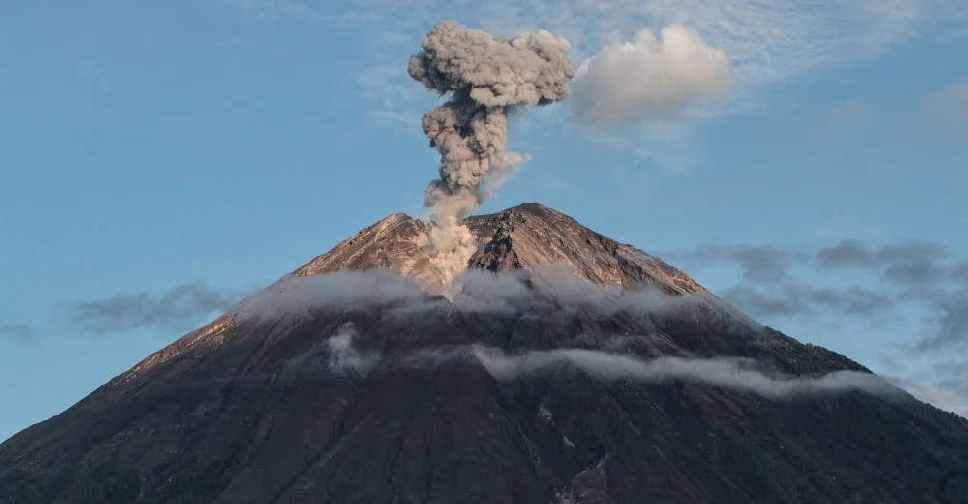
Mount Semeru, one of Indonesia’s most active volcanoes, erupted on Wednesday, prompting authorities to raise its alert status to the highest level, Level IV. The eruption sent a towering column of smoke and ash nearly two kilometers above the peak and forced evacuations in surrounding areas of Lumajang Regency. Officials warned of severe hazards including pyroclastic flows, ash-fall, and potential disruption to transportation and aviation.
Standing at approximately 3,676 meters, Mount Semeru unleashed a powerful eruption that sent pyroclastic flows down its slopes, endangering nearby valleys. The Volcanology and Geological Hazard Mitigation Center of Indonesia (PVMBG) elevated the volcano’s alert to Level IV, signaling an imminent or ongoing major eruption. Residents in surrounding villages were advised to stay at least 2.5 to 8 kilometers away from the crater as a precaution against debris flows and volcanic activity.
Authorities immediately implemented evacuation measures for communities at risk. Local officials widened the danger zone around the summit, urging residents to move to safer locations. Aviation and transportation agencies also issued warnings about ash clouds potentially affecting flight paths, highlighting the broader regional impact of the eruption.
Key Developments:
- Alert level raised to Level IV, the highest category under Indonesia’s volcanic warning system.
- Ash column reached approximately 2 kilometers above the summit.
- Pyroclastic flows traveled down slopes, with safety zones extended up to 8 kilometers from the crater.
- Evacuations initiated in at-risk villages in Lumajang Regency.
- Aviation authorities issued warnings regarding ash impacts on flights.
Historically, Mount Semeru has been a significant source of volcanic activity in Indonesia, with past eruptions causing fatalities, infrastructure damage, and widespread ash-fall. Indonesia’s location along the Pacific “Ring of Fire” makes it prone to seismic and volcanic events, and the current eruption underscores the persistent risk faced by densely populated regions of Java.
Emergency management teams are balancing multiple challenges, including monitoring volcanic activity, protecting residents, managing ash and debris flows, and coordinating with aviation authorities to mitigate disruption. The widened hazard zones and proactive evacuation measures reflect a comprehensive risk management approach aimed at minimizing casualties and property damage.
The eruption of Mount Semeru serves as a stark reminder of the ongoing volcanic risk in Indonesia. Authorities continue to monitor the situation closely, and the coming hours will be crucial in determining the scale and impact of the eruption. Communities in East Java remain on high alert as officials work to safeguard lives and maintain regional stability.

