
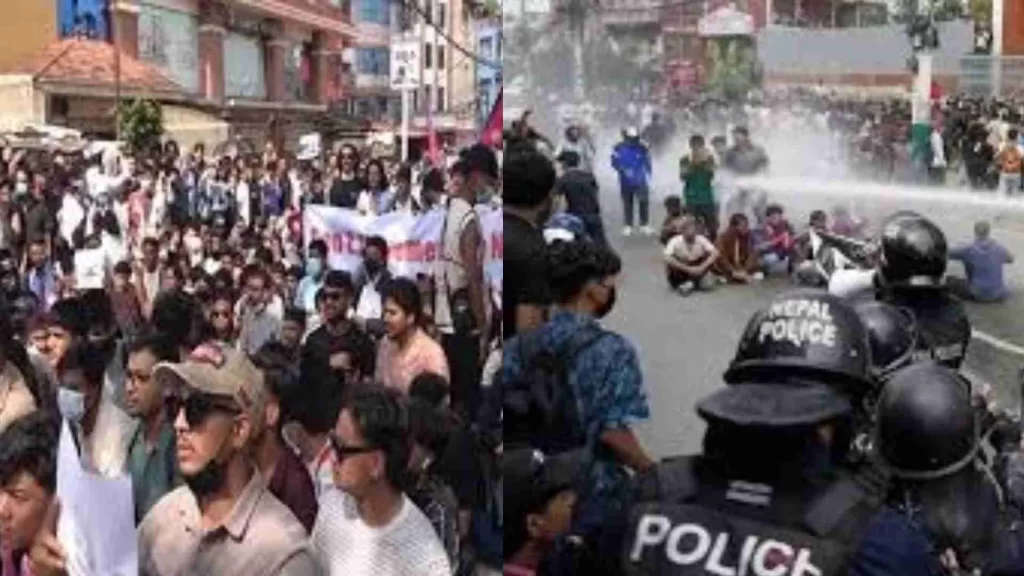
Authorities in Nepal’s Bara district imposed a day-long curfew on Thursday, November 20, 2025, after renewed clashes between Gen-Z protesters and supporters of the former ruling party, the CPN-UML, erupted in the town of Simara. The curfew, enforced from 1 p.m. to 8 p.m., was declared to prevent further escalation as tensions flared for the second time this month.
Escalation of Youth-Led Protests
The confrontation began when groups of young demonstrators, primarily from the Gen-Z cohort, gathered in central Simara to protest against what they describe as political negligence, limited employment opportunities, and rising economic frustration. Their demonstration intersected with a mobilisation by CPN-UML supporters, leading to verbal disputes that quickly intensified.
Witnesses reported stone-pelting and physical altercations, prompting security forces to intervene. Police units were deployed across key intersections, marketplaces, and administrative zones to stabilise the situation as crowds continued to swell.
Core Drivers Behind the Agitation
The latest episode reflects the broader socio-political concerns voiced by Nepal’s younger population. Key issues fuelling the unrest include:
- Youth Unemployment: Persistent job shortages affecting graduates and early-career professionals.
- Erosion of Trust: Growing dissatisfaction with traditional political parties and governance practices.
- Digital Mobilisation: Rapid organisation through social media channels, allowing youth voices to spread widely and quickly.
- Local Governance Concerns: Allegations of stalled development work and insufficient administrative accountability.
Administrative Response and Public Safety Measures
District officials stated that the curfew was a necessary measure to restore order and protect public property. They emphasised that normal activity would resume gradually once the security assessment indicated reduced risk. Authorities urged residents to remain indoors during curfew hours and avoid participating in unauthorised gatherings.
Security personnel maintained a visible presence throughout the town, with checkpoints set up to prevent further clashes. Officials also held preliminary discussions with community representatives to discourage additional mobilisation until tensions subside.
Broader Political Implications
Analysts note that the intensifying activism of Gen-Z citizens is emerging as a defining feature of Nepal’s changing political environment. The demographic—more technologically connected and more vocal than previous generations—is increasingly influencing public debates and national priorities.
With major political events and electoral activities ahead, the unrest in Simara could signal rising pressure on established political parties to address youth grievances more directly. Observers warn that without substantive engagement or policy action, similar protests could spread to other districts.
Outlook
The district administration is expected to evaluate the continuation of the curfew based on forthcoming security reports. Civil society groups have appealed for calm and urged both protesters and political supporters to pursue dialogue rather than confrontation.
The situation in Bara underscores a pivotal moment for Nepal, reflecting both the frustrations and the political awakening of its younger generation as they push for systemic change.

