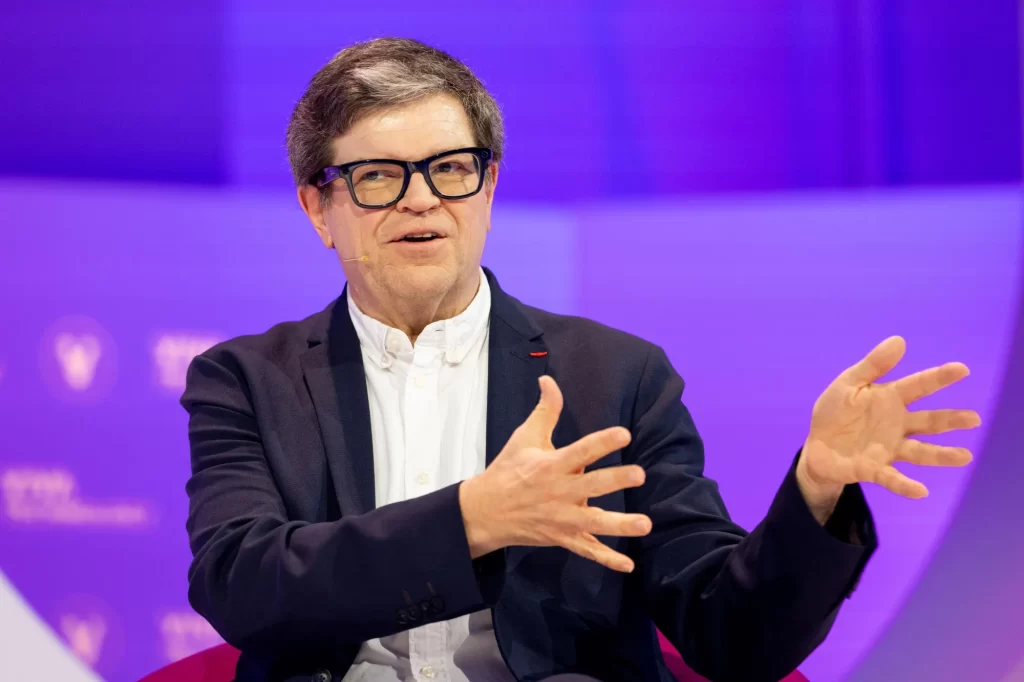
Yann LeCun, a foundational figure in modern artificial intelligence and Meta’s Chief AI Scientist, has confirmed his departure after 12 years with the company. He plans to leave at the end of 2025 to establish a new startup centered on Advanced Machine Intelligence (AMI), signaling a bold new chapter in AI research.
A Transformative Exit
LeCun’s decision marks a significant turning point for Meta, where he joined in 2013 to co‑found Facebook AI Research (FAIR). Over his tenure, he became widely recognized for pioneering work in deep learning, convolutional neural networks, and AI architectures now powering Meta’s generative AI systems.
In his formal announcement, LeCun stated that he is setting up a new company to advance the AMI research programme he has long pursued with colleagues at FAIR and New York University. He envisions AI systems that not only process data but also “understand the physical world, have persistent memory, can reason, and can plan complex action sequences.”
Bridging Independence and Partnership
Although LeCun is stepping away from his role at Meta, he is not severing ties entirely. His new venture will maintain a close partnership with Meta, and parts of the research will overlap with the company’s commercial interests, while other projects will remain exploratory.
LeCun expressed gratitude to Meta leadership — including Mark Zuckerberg and other top executives — for their support of FAIR and the AMI programme over the years.
Why the Departure Matters
LeCun’s exit reflects a deeper philosophical divergence over the future direction of AI. He has long criticized the prevailing dominance of large language models (LLMs), describing them as a limited path toward “real computer intelligence.” Instead, he champions “world models” — systems that learn from visual and spatial data, understanding cause and effect, and thereby simulating the physical world. He believes such architectures could surpass LLMs in enabling reasoning, planning, and memory.
His departure also coincides with recent organizational changes at Meta, including layoffs in AI roles and the restructuring of AI labs. Analysts suggest these changes may have marginalized LeCun’s long-term research vision, prompting his decision to pursue independent research.
Implications for the AI Landscape
LeCun’s move could reshape Meta’s R&D trajectory and influence the broader AI research community. By founding an independent lab focused on Advanced Machine Intelligence, he is emphasizing the development of AI systems capable of long-term memory, decision-making, and world understanding — going beyond the limitations of language-based models.
For Meta, the partnership ensures continued insight into LeCun’s research while allowing the company to focus on near-term commercial AI products. For the global AI community, his departure highlights a growing tension between short-term, LLM-driven AI development and ambitious, memory-driven architectures aimed at more general intelligence.
Conclusion
Yann LeCun’s exit from Meta to launch a startup devoted to Advanced Machine Intelligence represents a visionary step in AI research. His work underscores a future where AI machines can truly understand, reason, and learn about the world around them, potentially redefining the trajectory of artificial intelligence for years to come.