
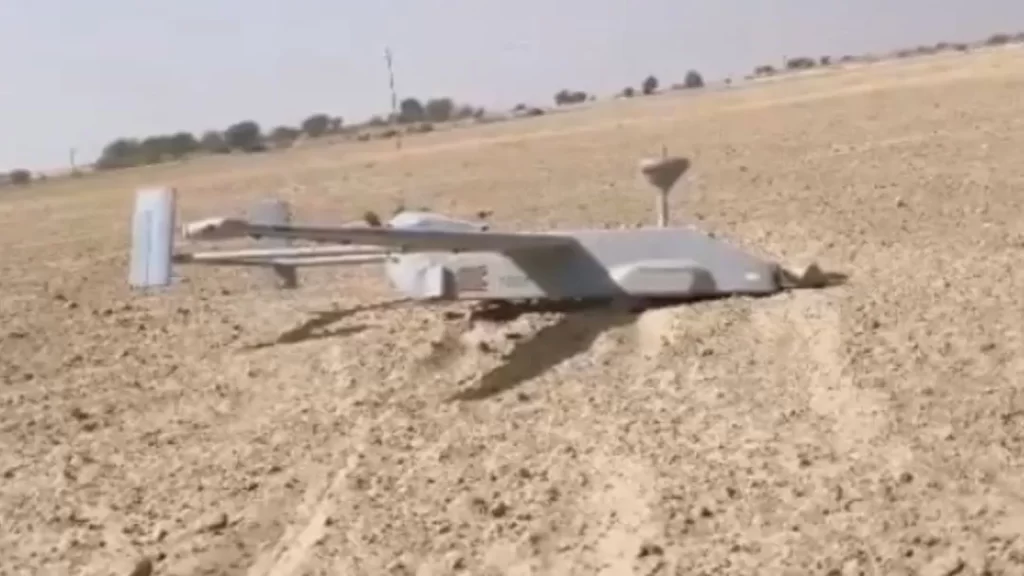
Jaisalmer, Rajasthan – A Remotely Piloted Aircraft (RPA) of the Indian Air Force (IAF) was forced to make a safe emergency landing near Jaisalmer after experiencing an engine malfunction during a routine training flight, officials confirmed on Wednesday.
The unmanned aircraft, reportedly of Israeli origin, developed a technical snag mid-air and was deliberately landed in an empty field near Ramgarh, close to the India–Pakistan border. Fortunately, there were no civilian injuries or property damage, and the aircraft sustained only minimal damage.
Key Facts
| Parameter | Detail |
|---|---|
| Incident | Engine malfunction during training sortie |
| Location | Ramgarh, Jaisalmer, Rajasthan |
| Outcome | Safe emergency landing, minimal damage |
| Investigation | IAF initiated inquiry; local police involved |
Operational and Strategic Implications
The IAF confirmed that the aircraft was recovered without harm to civilians or infrastructure. Police and Air Force teams jointly secured the crash site after local residents alerted authorities. The incident’s proximity to the India–Pakistan border has raised security concerns, prompting a detailed investigation by military and civil authorities.
Although the exact model of the RPA has not been officially disclosed, reports suggest it was a Heron Searcher, an Israeli-origin surveillance drone widely used by the IAF. Past incidents involving Heron aircraft in the region have highlighted both the strategic importance and operational risks of unmanned aerial missions along sensitive borders.
Broader Outlook
- Border Sensitivity: The landing near Ramgarh underscores the risks of operating RPAs in high-tension zones and the importance of strict safety protocols.
- Operational Readiness: While RPAs reduce risk to human pilots, technical failures such as engine malfunctions emphasize the need for preventive maintenance and real-time monitoring.
- Regulatory Oversight: The IAF has launched a Court of Inquiry to determine the root cause of the engine failure, reviewing maintenance records, flight data, and control systems.
- Public Trust: Prompt recovery and disclosure help maintain public confidence, though repeated technical issues may raise concerns about reliability and accountability.
The safe recovery of the IAF’s RPA highlights both the sophistication and the challenges of unmanned aerial operations in India’s defense strategy. As drones become increasingly central to reconnaissance, border patrol, and training missions, maintaining strict safety standards will remain critical. The inquiry is expected to inform improvements in drone diagnostics, control systems, and emergency landing protocols, enhancing India’s unmanned aerial capabilities along sensitive frontiers.

