
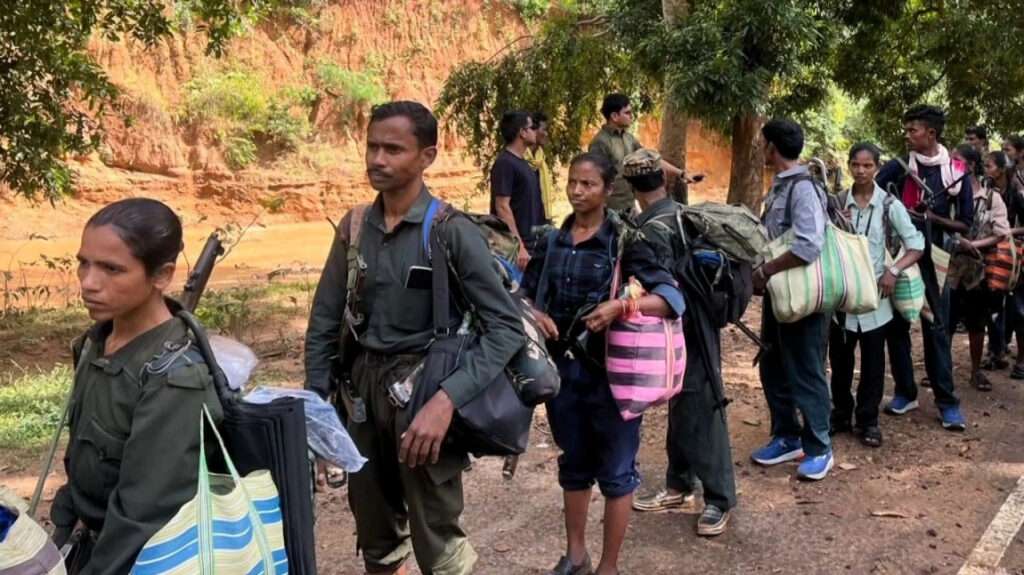
In a major development in the long-running Left-wing extremism conflict, the Maharashtra–Madhya Pradesh–Chhattisgarh (MMC) Special Zonal Committee of the banned CPI (Maoist) has formally offered to surrender by 15 February 2026, requesting that all anti-Maoist operations in the region be suspended until then. The written proposal, addressed to the chief ministers of the three states, marks one of the most significant overtures by Maoist leadership in recent years.
Maoists Seek Temporary Suspension of Security Operations
According to the letter signed by MMC spokesperson Anant, the group expressed readiness to “abandon weapons and join the government’s rehabilitation and mainstreaming process.” The Maoists, however, stressed that their organisational model—based on democratic centralism—requires time to communicate the decision to underground cadres spread across dense forests and remote areas.
The committee has requested a temporary halt to security force activities, including combing operations, intelligence-led deployments, and special anti-insurgency missions. They emphasised that the pause is necessary to ensure internal consultations and safe mobilisation of their members.
The group also announced that it would refrain from all offensive actions during this period, including suspending the observance of PLGA Week, an annual event central to Maoist mobilisation and propaganda.
Key Requests Made by the MMC Committee
The Maoists outlined several conditions to facilitate what they described as an “orderly and peaceful surrender.” These include:
- Suspension of anti-Maoist operations in the MMC zone until February 2026
- Permission to communicate through radio broadcasts to ensure their cadres receive accurate information
- Access to public representatives and journalists to negotiate terms and clarify rehabilitation procedures
- Assurance of safe passage for cadres willing to surrender in groups
Government’s Position and Strategic Context
The proposal comes at a time when security forces have intensified operations across the Red Corridor, significantly weakening the Maoist leadership network. The central government has repeatedly stated its goal of eliminating Maoist influence by March 2026, and Union Home Minister Amit Shah has previously ruled out any ceasefire, urging rebels to surrender unconditionally.
State police officials have welcomed the willingness to surrender but indicated that counter-insurgency operations will not be fully halted, citing security risks and the need for continued ground pressure to prevent regrouping.
Potential Turning Point in the Insurgency
If acted upon, the MMC committee’s offer could lead to one of the largest coordinated surrenders in the history of the insurgency, which has spanned over five decades and affected numerous districts across central India. Analysts believe that the declining cadre strength, logistical constraints, and sustained security pressure have pushed the group toward negotiation.
Outlook
The next few months will be crucial as state governments evaluate the Maoists’ demands and weigh security considerations against the prospect of a historic de-escalation. While the surrender offer signals a possible shift in the conflict’s trajectory, the absence of mutual trust and the government’s firm stance against halting operations may pose significant challenges.

