
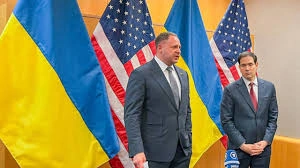
In a breakthrough development, the United States and Ukraine announced on Sunday, November 23, 2025, that they had drafted an updated and refined peace framework during high-stakes talks in Geneva, aimed at ending the protracted war with Russia. The joint declaration marked a significant recalibration of a controversial U.S.-backed 28-point proposal that had drawn widespread criticism for appearing overly favorable to Moscow.
Diplomacy Gains Momentum in Switzerland
U.S. Secretary of State Marco Rubio led the American delegation, while Andriy Yermak, head of Ukraine’s presidential office, represented Kyiv in discussions described as “highly productive.” The revised framework underscores commitment to Ukraine’s sovereignty, security guarantees, long-term economic development, infrastructure protection, and freedom of navigation.
Rubio expressed cautious optimism: while some sensitive points remain unresolved, he called the outstanding issues “not insurmountable.”
Key Revisions: From 28 to 19 Points
One of the most dramatic changes is the downsizing of the original 28-point proposal to around 19 points, according to Ukrainian officials. Sources say certain maximalist Russian demands have been removed, making the framework more balanced.
Among the reported concessions:
- The clause limiting Ukraine’s post-war military size has been softened or removed.
- The stipulation for NATO exclusion is being re-examined; Ukraine now insists that its future NATO aspirations should be decided on its own terms, not banned outright.
- Territorial negotiations are proposed to start along the current line of contact, rather than predetermining that certain areas become “de facto Russian.”
Ukrainian President Volodymyr Zelenskyy reiterated that Ukraine’s borders “cannot be changed by force.”
European Allies Respond With Caution
While European nations welcomed the new momentum, leaders from Germany, Finland, Poland, and the U.K. issued cautious remarks. Key concerns include:
- Calls for legally binding security guarantees, modeled on NATO’s Article 5.
- An insistence that frozen Russian assets should remain locked until Moscow pays reparations.
- Demand for full European involvement in any final deal, warning that a rushed agreement could undermine collective security.
Moscow Stays on Sidelines, Awaits Details
The Kremlin remains noncommittal. Spokesperson Dmitry Peskov said Russia has yet to receive an official copy of the revised framework and is relying on media reports. He confirmed that “dialogue is continuing,” but emphasized that any assessment must wait until a formal proposal arrives. Analysts indicate that the amended plan could serve as a basis for a settlement, although Moscow may still demand further changes.
Stakes and Next Steps
Both Kyiv and Washington have stated that final decisions will rest with Presidents Zelenskyy and Trump. The path ahead involves continued diplomatic work and consultations with European allies, with an eye on securing both a sustainable peace and a framework that respects Ukraine’s sovereignty and long-term security.
If successful, the refined peace framework could mark the first real pathway toward a just and lasting resolution of the Ukraine war. However, significant challenges remain, particularly regarding Russia’s willingness to formally engage and whether all parties can bridge remaining gaps on security guarantees and territorial integrity.

