
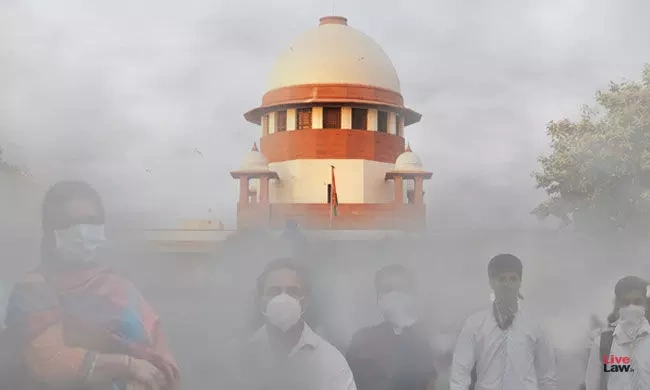
The Supreme Court of India has scheduled a crucial hearing on December 3 to consider a plea concerning the worsening air quality in the Delhi–National Capital Region (NCR). The court emphasized the severity of the situation, describing the persistent smog and high pollution levels as a public health emergency, and stressed the need for continuous scientific monitoring rather than sporadic judicial interventions.
During the preliminary hearing, a bench led by Chief Justice Surya Kant highlighted the urgency of addressing air pollution with long-term, expert-led solutions. Senior advocates appearing before the court described the pollution crisis as “alarming” and stressed that immediate action was needed to protect public health. The court observed that while the sources of pollution are well understood, implementing an effective, sustainable solution remains a challenge.
Key Issues Before the Court
- Complexity of Pollution Sources: The bench noted that no single factor is responsible for the recurring air quality crisis. Vehicular emissions, industrial output, construction dust, crop burning in neighboring states, and seasonal weather patterns all contribute to high pollution levels, requiring a comprehensive regional approach.
- Limitations of Judicial Directives: Judges acknowledged that while court orders can provide guidance, long-term improvement depends on expert-led studies and policy implementation. Judicial interventions alone cannot ensure “instant clean air,” and solutions must be grounded in scientific assessment and planning.
- Need for Continuous Monitoring: The court stressed that Delhi-NCR’s pollution problem is not merely seasonal. Continuous monitoring of air quality, combined with proactive measures to reduce emissions, is essential to prevent recurring health crises. Authorities are urged to adopt real-time monitoring systems and region-specific strategies to manage pollution more effectively.
The upcoming hearing is expected to focus on actionable steps and strategies to mitigate pollution levels, as well as measures to ensure accountability among state agencies. Experts believe that the Supreme Court’s directives could set the framework for a long-term regional plan, integrating technological monitoring, stricter emission regulations, and inter-state cooperation.
As Delhi-NCR grapples with frequent “very poor” and “severe” Air Quality Index (AQI) readings, the hearing on December 3 is being closely watched by environmentalists, policymakers, and citizens alike. The court’s emphasis on continuous monitoring and expert involvement underscores a shift towards a proactive, science-based approach to tackle one of India’s most pressing environmental challenges.

