
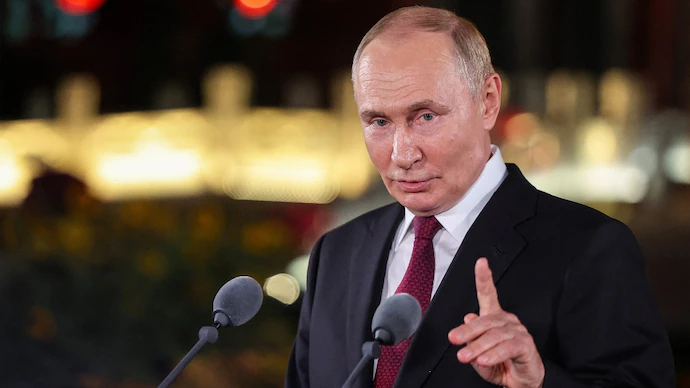
Russian President Vladimir Putin is set to visit India on December 4–5 for the 23rd India-Russia Annual Summit, a development officially confirmed by the Ministry of External Affairs. The summit with Prime Minister Narendra Modi is expected to reinforce the “Special and Privileged Strategic Partnership” between the two nations and chart the path for deeper cooperation across political, economic, defense, energy, and technological spheres.
A Summit of Renewed Purpose
This will be President Putin’s first visit to India since December 2021. During the summit, he is scheduled to hold high-level talks with Prime Minister Modi and participate in a ceremonial reception hosted by President Droupadi Murmu. The leaders are expected to review progress in bilateral relations and set a forward-looking agenda that adapts to changing global dynamics and emerging challenges.
Expanding Cooperation Beyond Tradition
India-Russia relations have historically centered around defense collaboration. Over time, this has evolved into joint development, co-production, and technology transfer initiatives, including missile systems, naval platforms, and aerospace projects. Energy cooperation has also emerged as a critical pillar, with Russia supplying discounted crude oil and natural resources that help India strengthen energy security and manage inflation.
Bilateral trade has seen a significant surge, reaching nearly USD 68.7 billion in the fiscal year 2024–25. Looking ahead, both nations are exploring frontier areas such as advanced technology, space exploration, quantum computing, and infrastructure connectivity. Discussions are expected to include expanding transport corridors, enhancing energy security, and boosting technological collaboration aligned with India’s focus on self-reliance and innovation.
Strategic Context: Navigating a Multipolar World
The summit comes at a time of heightened geopolitical volatility, with shifting alliances and sanctions regimes reshaping the global order. India’s foreign policy has consistently emphasized strategic autonomy, while Russia sees the visit as an opportunity to strengthen ties with a major global player amidst international pressures.
For India, the summit represents a delicate balancing act—deepening strategic cooperation with Russia while maintaining and expanding partnerships with other global powers. Potential agreements could encompass defense, energy, trade, technology, and labor mobility, offering both security and economic advantages.
Key Expected Outcomes
Possible deliverables from the summit include:
- Renewal and expansion of defense cooperation, including procurement and co-development of next-generation systems.
- Energy and natural resource agreements to bolster India’s long-term energy security.
- Infrastructure and transport connectivity projects to enhance trade and supply-chain resilience.
- Strategic collaboration in high technology, space, and innovation sectors.
- Labor mobility and skill-exchange pacts to optimize human-capital potential.
Despite the promise of significant cooperation, the summit will require careful navigation of international sensitivities, particularly amid Western criticism of Russia’s foreign policy actions. India’s diplomatic skill will be pivotal in maintaining its strategic autonomy while pursuing ambitious partnerships.
Conclusion: A Defining Moment for India-Russia Ties
President Putin’s visit marks a defining moment for India-Russia relations. Beyond reaffirming traditional areas of cooperation, the summit is expected to unlock new avenues in technology, energy, and infrastructure. As both nations strive to navigate a complex global landscape, the outcomes of this summit could shape the trajectory of bilateral relations well into the next decade.

