
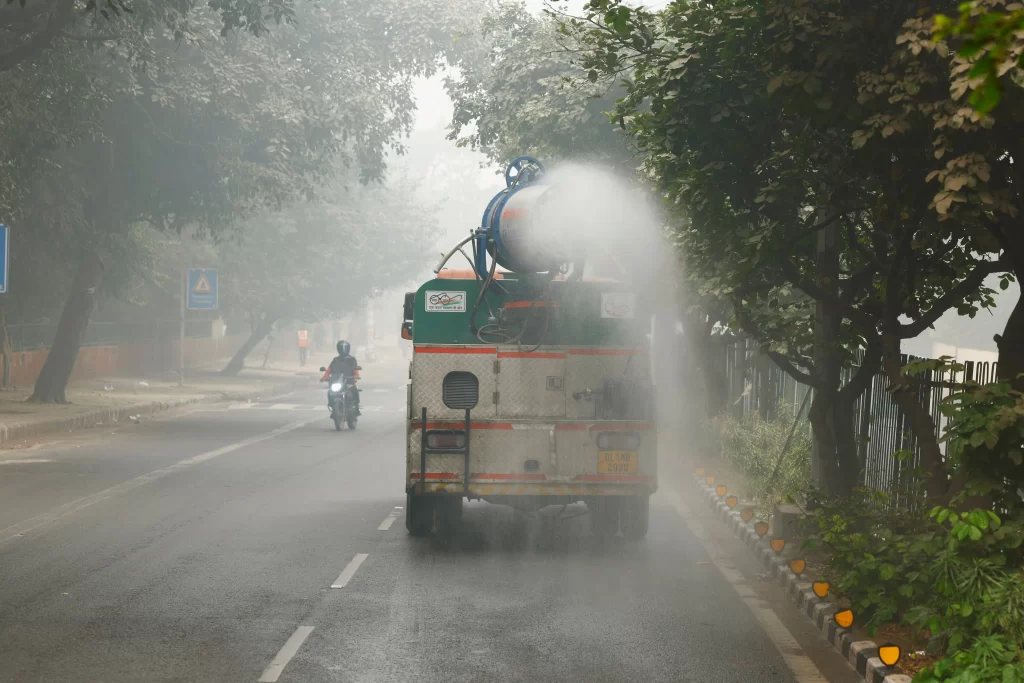
Toxic Smog Triggers Public Health Emergency
Winter 2025 has brought a severe air-quality crisis to India’s major cities. On November 28, several areas in Delhi recorded Air Quality Index (AQI) readings above 400, placing them in the “severe” category. Simultaneously, Mumbai witnessed AQI levels ranging from “poor” to “very poor,” prompting authorities to issue stop-work notices to multiple construction sites. Reduced visibility, rising respiratory ailments, and public concern have led civic authorities to treat the situation as a public health emergency.
Delhi Grapples with Hazardous Smog
- Many localities in Delhi recorded AQI values exceeding 400, with some areas in hazardous territory.
- The government reactivated measures under the Graded Response Action Plan (GRAP), including mandatory 50% work-from-home policies for state and private offices.
- Hospitals reported a surge in respiratory complaints, particularly among children, the elderly, and people with preexisting conditions.
Public demand for stronger long-term strategies has intensified, with citizens pointing out that seasonal restrictions alone cannot address the root causes of persistent pollution.
Mumbai Takes Action Against Pollution Sources
- The Brihanmumbai Municipal Corporation (BMC) issued stop-work orders to more than 50 construction sites to control dust and particulate pollution.
- Hundreds of sensor-based air-quality monitors were deployed at construction sites, with inactive or non-compliant sites flagged for strict enforcement.
- Water-sprinkling drives on major roads, stricter controls on high-emission activities, and increased use of cleaner fuels in public transport were implemented.
Authorities highlighted that unchecked construction, vehicular emissions, and dust were contributing to Mumbai’s worsening air quality, raising concerns of a crisis comparable to Delhi’s winter smog.
Causes Behind the Deterioration
Experts attribute the air-quality surge to multiple factors:
- Elevated levels of particulate matter (PM2.5 and PM10) from construction dust, traffic emissions, and burning of biomass or waste.
- Seasonal weather conditions like calm winds and low temperatures that trap pollutants close to the ground.
- Gaps in enforcement, with some construction sites failing to follow dust-control guidelines, exacerbating pollution spikes.
Civic authorities are attempting to address these gaps, but activists warn that short-term measures alone will not be sufficient. Calls for stricter regulations, cleaner fuel adoption, improved public transport, and public awareness initiatives are growing louder.
Conclusion: A Turning Point for Urban Air Management
The air-quality emergency in Delhi and Mumbai underscores the challenges posed by urban growth, seasonal weather, and lax enforcement. Immediate measures such as halting construction and water-sprinkling are essential to provide relief, but structural reforms are necessary to prevent toxic smog from becoming a seasonal norm. The coming weeks will test the effectiveness of these interventions and could shape India’s approach to managing urban air pollution in the future.

