
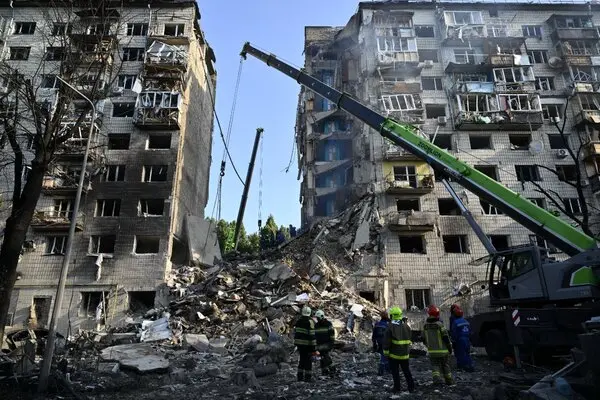
In a dramatic overnight escalation of the Russia–Ukraine War, Moscow launched a massive missile and drone barrage on the Ukrainian capital Kyiv, leaving more than 600,000 homes without electricity — including over 500,000 in the city itself. The strike, coming as the United States pushes diplomatic efforts for a ceasefire, underscores the precariousness of civilian life even amid renewed calls for peace.
The assault — described by Ukrainian officials as one of the most significant to date — involved roughly 36 missiles and nearly 600 attack drones, striking both energy infrastructure and residential neighborhoods across Kyiv and surrounding regions.
- At least three people were killed and nearly 30 others injured, according to preliminary reports. Officials said apartment buildings and high‑rises were damaged, fires broke out, and multiple districts suffered power grid failure.
- The resulting blackout affected not just electricity — water supply and heating, especially crucial as winter sets in, were also disrupted amid growing humanitarian concerns.
Earlier this week, Kyiv had endured similar strikes that killed seven and injured dozens, highlighting a pattern of repeated attacks even as diplomatic momentum around a peace framework gains steam.
The economic and human toll of these strikes is mounting. The city’s largest energy provider has warned that damages to power plants, substations and transmission lines may take weeks to fully assess. Meanwhile, residents face the dual burden of damaged property and life disrupted by blackout, cold, and uncertainty.
Meanwhile, the diplomatic landscape is becoming increasingly fraught. The United States — at the forefront of renewed ceasefire proposals — has been working on a plan to bring both sides to the negotiation table. But the latest attacks cast doubt on Russia’s willingness to respect any truce, even as its air strikes mount.
Leaders in Kyiv and Western capitals issued sharp condemnations. Ukrainian officials described the barrage as “a deliberate assault on civilians and infrastructure while the world talks peace.” European allies and US negotiators now face pressure: can diplomacy gain real traction when missiles continue to rain on residential neighborhoods?
Table: Impact of the November 29 Assault on Kyiv
| Impact Area | Immediate Effects |
|---|---|
| Civilian casualties | Minimum 3 killed, ~30 injured; residential buildings damaged |
| Power & utilities | Over 600,000 homes without electricity; water and heating services disrupted |
| Infrastructure damage | Power grid substations, energy plants, residential buildings targeted |
| Civilian morale | Renewed fear, blackout in winter season, rising humanitarian concern |
| Diplomacy & security | Undermines trust ahead of US‑backed peace talks; raises doubts on ceasefire validity |
Analysis:
This spate of violence underscores a grim reality: infrastructure warfare has become central to the conflict. By targeting energy — essential not just for comfort but for survival in freezing months — Russia appears to leverage civilian hardship as a tactic to pressure Kyiv into concessions. The blackout strategy intensifies winter’s threat, when access to power, heating and water becomes crucial.
At the same time, launching such an extensive attack while peace negotiations are underway sends a stark message: military objectives remain a priority over diplomacy. This raises tough questions about Russia’s true intent. For Ukraine and its allies, sustaining international pressure, maintaining air defense readiness, and accelerating humanitarian response will be key to countering both the physical and psychological impact of the strikes.
Moreover, the scale and frequency of attacks could shape public opinion in Europe and the United States. As winter deepens, stories of civilian hardship may amplify calls for stronger intervention and long-term energy-security support for Ukraine.

