
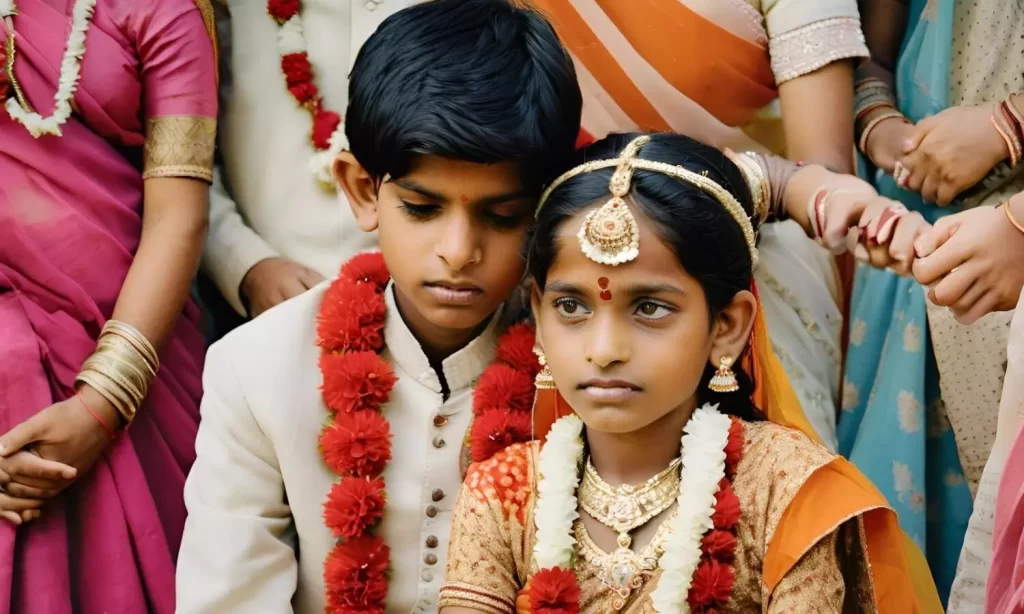
A recent disclosure by the Women and Child Development (WCD) Department of Madhya Pradesh has triggered widespread concern after official data indicated a significant rise in reported child marriage cases across the state. The situation drew further attention when the Minister of the department stated that she was “not aware” of the spike, prompting political and social backlash.
According to the state’s compilation of district-level reports, several regions have witnessed a notable increase in underage marriages over the past year. Officials within the department have highlighted that these cases are often concentrated in rural and economically weaker pockets, where early marriages remain deeply rooted in social customs. The rise in case numbers has renewed focus on the urgent need to strengthen both preventive mechanisms and community-level awareness.
Contradiction Between Department Data and Minister’s Statement
The controversy escalated when the minister responsible for overseeing child welfare policies commented that she had no information regarding the surge. Her remarks stood in contrast to the department’s own statistics, raising questions about communication gaps and the level of monitoring within the ministry. Opposition leaders quickly capitalized on the inconsistency, criticizing the government for insufficient oversight on an issue that directly impacts the safety and rights of minors.
Child-rights activists also expressed concern, noting that leadership awareness is essential for effective policy implementation. They underscored that when officials at the top remain uninformed about departmental realities, interventions risk becoming delayed or ineffective.
Social Factors Behind the Rise
Experts attribute the increase in child marriage cases to several underlying factors, including persistent poverty, cultural pressures, lack of education, and inadequate access to social support systems. In many communities, economic hardship pushes families to arrange early marriages for their daughters, viewing it as a way to reduce financial burden or ensure perceived security.
Despite ongoing awareness campaigns, activists point out that deeply entrenched social practices require sustained and long-term engagement. While the state government has launched various schemes aimed at empowering girls—such as educational incentives and financial assistance—gaps remain in ground-level execution and community outreach.
Enforcement Challenges
Law enforcement agencies in Madhya Pradesh have frequently stated that prevention of child marriage remains complicated due to the clandestine nature of such ceremonies. Many instances occur late at night or during large community events where detection becomes difficult. Officers also acknowledge that families often avoid reporting due to fear of social stigma or pressure from local networks.
Authorities have emphasized the importance of early reporting, collaboration with local NGOs, and strengthening child protection committees to curb the practice more effectively.
Call for Stronger Monitoring and Policy Action
Following the controversy, child welfare advocates have urged the state government to enhance coordination between departments, ensure accurate information-sharing with ministers, and intensify monitoring mechanisms. They argue that leadership awareness is crucial for rapid policy response, budget allocation, and enforcement of existing laws such as the Prohibition of Child Marriage Act.
As Madhya Pradesh grapples with the rising numbers, experts highlight that addressing child marriage requires more than legal enforcement—it demands sustained community education, economic support for vulnerable families, and consistent political commitment.

