After seven tumultuous days of repeated cancellations and widespread travel disruption, India’s largest low-cost carrier IndiGo remains at the center of a severe operational storm. The crisis, traced to the airline’s failure to adapt crew scheduling to tighter fatigue-management rules, has left lakhs of travellers stranded and triggered a government probe as well as stern warnings from regulators.
What Started the Crisis
The trouble began when new crew regulations under the revised Flight Duty Time Limitations (FDTL) came into force in November 2025. These rules — designed to increase pilot rest time, limit night flights, and address flight-crew fatigue — significantly tightened roster flexibility. Despite a mandated preparatory phase, IndiGo reportedly failed to bolster crew strength or restructure rosters adequately. The result was mounting pilot shortages, unsustainable scheduling pressure, and cascading cancellations across the airline’s network.
By early December, daily cancellations surged to between 170 and 200 flights — the highest for any carrier in the country. On December 5 alone, over 1,000 flights were cancelled, with none departing from Delhi that day, and cancellations spiking in other major hubs like Mumbai and Bengaluru.
Fallout for Passengers
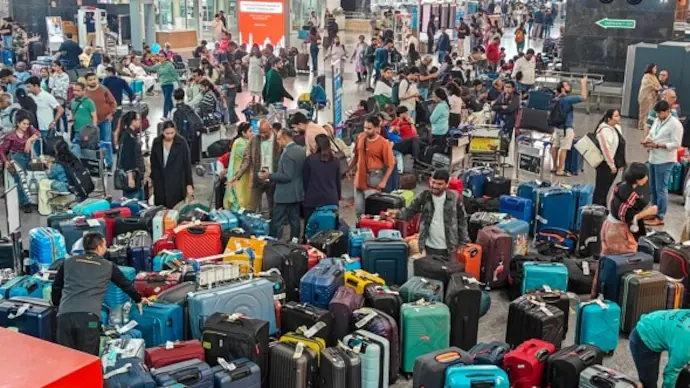
The disruptions brought travel plans to a standstill. Airports across Delhi, Mumbai, Bengaluru, Chennai, and other metros turned chaotic, with thousands of passengers stranded, baggage pending, and replacement flights unavailable. The ripple effect pushed domestic airfares to unprecedented levels, leaving travellers with limited options.
Public anger mounted, with multiple petitions and pleas, including a Public Interest Litigation in the Delhi High Court demanding refunds, putting pressure on both the airline and regulators to act swiftly.
Government Response
In response, the Ministry of Civil Aviation imposed a hard deadline: IndiGo was ordered to clear all pending refunds by a set time and barred from levying rescheduling fees on affected passengers. A high-level enquiry committee was constituted to probe internal lapses, and the airline was asked to provide a detailed plan for crew recruitment, safety assessments, and schedule stabilization.
Meanwhile, the aviation regulator granted a temporary exemption from some provisions of the FDTL for IndiGo’s A320 fleet until February 2026, allowing limited flexibility in crew scheduling. Regulators also offered operational support to ensure safety and continuity.
The response, however, drew criticism from pilot unions, safety experts, and industry stakeholders. Some argued that easing fatigue rules undermines safety standards in favor of operational convenience.
Broader Implications for Indian Aviation
The crisis has broader repercussions beyond IndiGo:
- Systemic Risk: IndiGo accounts for roughly 65% of domestic flights, and its operational issues nearly halted domestic air travel.
- Regulatory Credibility: The temporary waiver raises questions about the enforcement of safety and fatigue norms.
- Public Trust: The airline faces serious reputational damage as passengers lose confidence in its reliability.
IndiGo’s Current Position
IndiGo has acknowledged “misjudgment and planning gaps” in implementing the new FDTL norms. The airline claims corrective measures are underway and expects full normalization of operations by mid-December 2025. Regulators have warned that failure to comply with refund obligations or passenger assistance requirements could trigger strict action.
Key Facts at a Glance
| Issue | Details |
|---|---|
| New Regulation | Revised FDTL rules: extended rest periods, night-duty limits, stricter fatigue norms |
| Cancellations | 170–200 flights per day over peak period; over 1,000 flights cancelled on Dec 5 |
| Passenger Impact | Thousands stranded, widespread delays, baggage issues, fare surge on alternate flights |
| Government Response | High-level inquiry, refund deadline, temporary exemption from FDTL, operational support |
| Aviation Risk | Exposure of industry’s reliance on a single carrier; regulatory credibility questioned; passenger trust eroded |