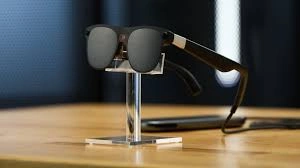
In a bold resurgence in wearable technology, Google has unveiled Project Aura — a pair of wired extended‑reality (XR) glasses developed in collaboration with Xreal, running on Google’s Android XR platform. The announcement, made during the company’s “Android Show: XR Edition” on December 8, 2025, signals Google’s renewed ambition to make immersive computing more accessible, practical, and integrated into daily life.
A New Chapter for Smart Glasses
Project Aura stands out as the second official device built on Android XR — and notably the first in a sleek glasses form factor rather than a bulky headset. Unlike earlier XR/VR headsets, Aura is engineered as a lightweight, wearable accessory. The glasses use transparent “optical see-through” lenses to overlay digital content onto the real world, blending physical and virtual environments in real time.
Rather than housing powerful hardware in the glasses themselves, Project Aura relies on a tethered “puck” — a compact compute-and-battery unit that also serves as a trackpad — which connects to the glasses via a cable. This design enables a wide field of view (70 degrees) while preserving the glasses’ slim profile and wearability.
Seamless Integration — Android, AI, and Real‑World Utility
Because Project Aura runs Android XR, existing Android apps can run natively without requiring special XR-specific adaptation. This allows users to access familiar apps such as maps, messaging, media, or productivity tools in a new spatial format.
Aura is also deeply integrated with Google’s AI assistant, Gemini. Demonstrations during the reveal showcased real-time translation subtitles for cross-language conversations, on-the-go notifications and messaging, photo capture via glance or gesture, contextual maps and navigation, and ambient information displays — all delivered hands-free and discreetly.
This combination of Android compatibility, Gemini-powered AI, and XR overlays points to a seamless, contextual computing experience that could position smart glasses as a practical alternative to smartphones rather than just a niche gadget.
Developers, Privacy, and Ecosystem Strategy
With the unveiling of Developer Preview 3 of the Android XR SDK, Google is already opening the platform to developers, offering APIs that support spatial UI adaptation, display field-of-view detection, and ARCore-powered geospatial capabilities.
On the privacy front, Google and Xreal emphasized safeguards: sensors and cameras include visible recording indicators, and strict permission controls have been implemented to ensure user safety.
Strategically, Project Aura reflects Google’s long-term XR vision. Instead of focusing on a single eyewear design, Google is partnering with multiple hardware makers to build an open XR ecosystem that accommodates multiple form factors, encourages developer adoption, and avoids fragmentation.
Broader Implications: Redefining Wearables and Digital Interaction
Project Aura demonstrates how wearable computing is evolving from isolated headsets into everyday wearable accessories. For end users, it suggests a future where screens are ambiently embedded in the field of vision, enabling digital tools to accompany real-world tasks seamlessly — whether cooking, traveling, working, or socializing.
For developers, the open platform and native app compatibility lower the barrier to building meaningful AR experiences. For the tech industry, Google’s move injects fresh energy into the XR space at a time when demand for immersive, AI-powered wearables is rising globally.
Key Facts at a Glance
| Feature | Details |
|---|---|
| Device | Project Aura — wired XR smart glasses by Google + Xreal |
| Platform | Android XR (second official device, first glasses format) |
| Hardware Design | Lightweight glasses + tethered puck (compute + battery + trackpad) |
| Field of View (FoV) | 70° — wide immersive view |
| Main Features | Optical see-through AR, native Android app support, Gemini AI assistant, real-time translation, navigation, hands-free controls, photo capture |
| Developer Ecosystem | Android XR SDK Developer Preview 3 — spatial UI, ARCore support, display APIs |
| Launch Timeline | Developer kit expected first; consumer-ready release targeted for 2026 |
As Google and Xreal prepare for a full launch, Project Aura represents a significant milestone in the evolution of wearable computing. By combining AI, Android’s ecosystem, and immersive extended reality in a familiar glasses form factor, Google may have laid the foundation for a new generation of “everyday XR” devices, potentially redefining how people interact with digital tools, their surroundings, and each other.