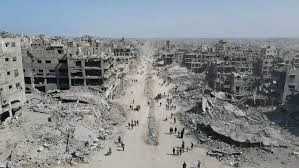
In a pivotal escalation of diplomatic tensions, Israel has reiterated that full disarmament of the Palestinian militant group Hamas is a non-negotiable condition of the U.S.-backed Gaza peace plan, intensifying debate over the future of ceasefire talks following recent comments by senior Hamas leaders suggesting only a temporary “weapons freeze.”
The U.S.-sponsored peace framework—structured around a phased approach to ending the prolonged Gaza war that erupted on October 7, 2023—appears increasingly fragile as core disagreements over disarmament resurface at the center of negotiations.
Hamas Suggests Weapons Freeze, Rejects Full Disarmament
A senior Hamas figure, Khaled Meshaal, signaled this week that while the group may be willing to consider a “freeze” or storage of its weapons as part of a longer-term truce, it categorically rejects demands for total disarmament. Meshaal described full disarmament as “unacceptable to the resistance,” framing the militant arsenal as essential to Palestinian security and negotiating leverage.
This nuanced proposal departs sharply from the requirements laid out in the 20-point plan associated with the peace efforts of U.S. President Donald Trump and backed by the United Nations Security Council. Under this architecture, the planned second phase of the ceasefire includes deploying an International Stabilization Force (ISF) to oversee demilitarization and reconstruction in Gaza—tasks complicated by Hamas’s stance.
Israel’s Firm Stance on Disarmament
Israeli officials have made clear that the future of Hamas as an armed entity has no place within the envisioned peace framework. Government sources emphasized that disarmament is fundamental to demilitarizing Gaza and ensuring long-term security for Israel. An Israeli spokesperson stated unequivocally that “Hamas will be disarmed” under the peace plan’s terms, reinforcing years of policy that reject any scenario in which Hamas retains military capacity.
Prime Minister Benjamin Netanyahu has also underlined that progress beyond the current ceasefire hinges on resolving the disarmament question. Despite acknowledging the nearing conclusion of the first phase of the ceasefire, Netanyahu has stressed that without dismantling Hamas’s armed structure, full peace prospects remain elusive.
U.S. Diplomatic Momentum and the Board of Peace
In parallel to these sharp policy contrasts, the Trump administration is advancing the establishment of a “Board of Peace”—a multinational transitional body intended to oversee Gaza’s reconstruction and governance during a transitional period. President Trump announced that board members would be named early next year, a move designed to signal international investment in stability and development.
Additionally, U.S. officials are reportedly preparing to appoint a senior general to lead the ISF, underscoring Washington’s commitment to maintaining security while facilitating the peace process.
Negotiation Impasse and Regional Implications
Hamas’s resistance to full disarmament underscores deep mistrust in the peace process and reflects broader regional tensions. The group’s readiness to discuss a temporary weapon freeze may provide a limited opening, but Israeli and U.S. negotiators argue this falls short of neutralizing security threats posed by an armed militant faction within Gaza. Analysts suggest that without clear mechanisms to enforce disarmament, any ceasefire may be vulnerable to collapse, potentially reigniting hostilities that have devastated the enclave and strained international humanitarian resources.
Key Points at a Glance
- Israel demands full Hamas disarmament as a core element of the U.S.-led peace plan.
- Hamas proposes a weapons “freeze” but rejects complete disarmament, citing resistance rights.
- The peace plan’s second phase includes deploying an international force and constructing a transitional governance structure.
- Trump administration advances “Board of Peace” to manage post-conflict governance and reconstruction.
Outlook
As diplomats prepare for intensified negotiations in the coming weeks, the chasm between Israel’s security imperatives and Hamas’s strategic posture presents a formidable challenge to the peace plan’s implementation. With global stakeholders watching closely, the outcome of these discussions will not only shape Gaza’s immediate future but could redefine broader Middle Eastern geopolitics.
This article contains breaking developments; further updates may follow.