
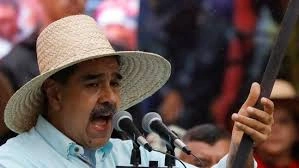
In a decisive expansion of U.S. sanctions targeting Venezuela, the United States Treasury Department on Thursday announced fresh punitive measures against three nephews of Venezuelan First Lady Cilia Flores and six crude oil tankers linked to the Maduro government’s oil trade. The sanctions, issued as part of the Trump administration’s intensified pressure campaign, mark a significant escalation in Washington’s strategy to disrupt financial lifelines fueling President Nicolás Maduro’s embattled regime.
The sanctions designation, announced on December 11, 2025, by the U.S. Treasury’s Office of Foreign Assets Control (OFAC), targets key individuals and shipping entities alleged to be central operatives in bolstering Venezuela’s controversial oil sector. Notably, the measures hit Franqui Flores, Efrain Antonio Campo Flores, and Carlos Erik Malpica Flores, nephews of First Lady Cilia Flores, who Washington alleges have played roles in illicit activities that benefit the Maduro regime.
Key Sanctions Targets
- Sanctioned Individuals:
- Franqui Flores
- Efrain Antonio Campo Flores
- Carlos Erik Malpica Flores
(All related to First Lady Cilia Flores and implicated in past drug trafficking or corruption cases.)
- Sanctioned Assets:
- Six crude oil tankers and associated shipping companies accused of supplying revenue to the Maduro government through deceptive shipping and dark‑fleet tactics.
The Treasury’s action freezes any U.S. assets of the designated individuals and entities and bars Americans and U.S. firms from conducting business with them. The sanctions further broaden already tight economic controls and come just one day after U.S. forces seized a Venezuelan oil tanker, Skipper, in the Caribbean Sea—a seizure that Caracas condemned as “international piracy.”
Context: Escalation in U.S.–Venezuela Confrontation
Observers say the new sanctions align with the Trump administration’s broader policy to undercut Maduro’s political and economic influence, particularly relating to Venezuela’s oil exports, the country’s principal source of hard currency. Several of the targeted tankers are Panama‑flagged vessels that recently loaded crude in Venezuela, while others are registered under the Cook Islands and Hong Kong flags.
Two of the sanctioned nephews, Efrain Campo Flores and Franqui Flores, have previously been dubbed “narco‑nephews” by U.S. authorities. They were arrested in 2015 by U.S. Drug Enforcement Administration agents in Haiti and were convicted in 2016 for plotting to transport cocaine into the United States; they were later released in a prisoner exchange in 2022. A third nephew, Carlos Erik Malpica Flores, faces renewed sanctions for alleged corruption linked to Venezuela’s state oil firm PDVSA.
Analysts say these designations not only spotlight allegations of corruption and narco‑trafficking but also aim to deter international shipowners and insurers from engaging with vessels tied to Venezuela’s oil trade—a move that could shrink the Maduro government’s ability to export crude.
Economic and Political Implications
The sanctions have already rippled through global oil markets, contributing to price volatility as traders reassess risk profiles for Venezuelan crude. With Venezuela’s oil exports critical to its fiscal survival, restricting tanker access and tightening sanctions could significantly stress PDVSA’s revenue generation and broader economic stability.
Furthermore, this latest U.S. push intensifies geopolitical friction in the Caribbean and Latin America. Venezuelan President Nicolás Maduro has vehemently denied the charges and accused the U.S. of pursuing regime change to seize control of Venezuela’s vast oil reserves. Moscow and Beijing, long‑standing allies of Caracas, have voiced diplomatic support, urging restraint and decrying what they describe as coercive U.S. tactics.

