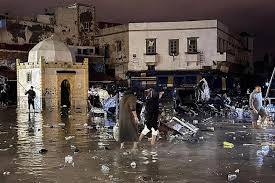
At least 37 people have died and many more are injured after an intense period of torrential rainfall triggered sudden flash floods in the coastal province of Safi on Sunday, December 14, 2025. The catastrophic weather event — described by officials as the deadliest flash flood in the region in over a decade — unfolded after just one hour of extreme rainfall, overwhelming drainage systems and sweeping through residential and commercial areas with devastating force.
Chaos After a Storm: Rapid Flooding and Human Toll
The flooding, which struck late Sunday, transformed familiar streets into dangerous torrents that inundated homes, shops, and key infrastructure. Authorities confirmed 37 fatalities, with an additional number of individuals hospitalized and in critical condition. Rescue teams are continuing operations to assist survivors and to recover any missing persons.
Local hospitals, including the major Mohammed V Hospital in Safi, are treating flood victims, with reports of people suffering severe injuries from the rushing water and collapsed structures. Many residents reported that vehicles were swept away and entire neighborhoods were disrupted as floodwaters reached significant depths within minutes.
Widespread Damage and Infrastructure Breakdown
Early assessments from emergency workers reveal extensive infrastructure damage across the old city and surrounding districts. Approximately 70 homes and businesses were flooded, forcing evacuations and displacements. Roads that serve as critical arteries for transport and trade were rendered impassable, further complicating rescue and relief efforts.
Officials also announced the temporary closure of schools and interruption of public services as authorities focus on search and rescue, debris removal, and recovery operations. Residents in low‑lying areas described scenes of chaos as water rushed into streets and buildings, leaving communities struggling to cope with the aftermath.
Context of Extreme Weather and Climate Vulnerability
Meteorologists note that this extreme rainfall event follows a broader pattern of weather volatility in Morocco, where periods of prolonged drought have been interrupted by sudden and powerful storms. These climatic swings have heightened the vulnerability of cities like Safi, where aging urban infrastructure can be quickly overwhelmed by intense precipitation.
While historically flash floods have struck various regions across Morocco, local officials are keen to emphasize that the intensity and sudden onset of the Safi flooding were unprecedented in recent years — raising urgent questions about climate resilience and emergency planning.
Response Efforts and Solidarity Mobilization
In response to the disaster, national and local authorities have mobilized civil protection teams, volunteers, and emergency responders to deliver aid, open temporary shelters, and facilitate medical assistance. There has also been an outpouring of community solidarity, with sports clubs and civic organizations publicly offering condolences and material support for affected families.
Bullet Point Summary of Immediate Impacts:
- Fatalities: At least 37 confirmed dead.
- Injuries: Dozens hospitalized, with several in critical condition.
- Property Damage: Flooding of approximately 70 homes and businesses.
- Transport: Roads and transport links severed by floodwaters.
- Public Services: Temporary school closures and service interruptions reported.
Looking Ahead: Recovery and Resilience
As Safi begins the long process of recovery, authorities face mounting pressure to not only repair physical damage but to strengthen infrastructure and urban planning in ways that mitigate future climate‑linked risks. The event is likely to trigger broader national discussions on emergency preparedness, sustainable water management, and investment in flood defenses.
With search operations still ongoing and communities grieving, Morocco confronts a stark reminder of how sudden climate extremes can transform everyday life — and how resilience will be central to rebuilding in their wake.