
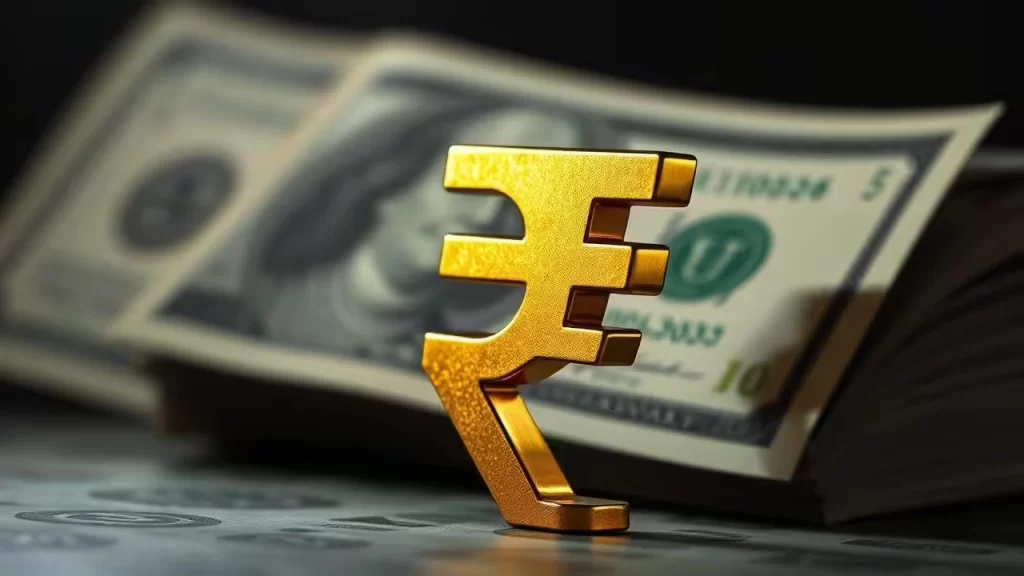
The Indian rupee hit a record low by slipping past ₹91 against the US dollar this week, intensifying concerns over currency stability, persistent foreign portfolio outflows, and a widening trade imbalance. The sudden volatility prompted decisive action by the Reserve Bank of India (RBI), but analysts warn that deeper structural pressures could keep the rupee under strain into 2026.
On Tuesday, the rupee breached the critical ₹91 per USD mark for the first time in history during intra‑day trading, before marginally recovering. The initial decline was driven by continued foreign institutional investor (FII) sell‑offs, repatriation of foreign direct investment (FDI) profits, and unresolved trade negotiations with several major partners, including the United States.
As of Wednesday, the currency stabilized around ₹90.38 per US dollar following targeted market intervention by the RBI, marking the central bank’s most aggressive defense of the rupee in recent months. State‑run banks, acting on behalf of the RBI, supplied dollars in both spot and non‑deliverable forward (NDF) markets, leading to a notable intraday rally.
Key Drivers Behind the Decline
The rupee’s weakness stems from multiple converging macroeconomic and geopolitical factors:
- Persistent Capital Outflows: Overseas investors have been net sellers in Indian equity and debt markets throughout 2025, driven partly by a stronger US dollar and expectations of higher returns in developed markets.
- Trade Uncertainty: Delays and stalemates in trade talks—particularly with the United States—have added pressure to export-oriented sectors and worsened sentiment, increasing demand for dollars.
- Widening Trade Deficit Concerns: While recent data indicate some improvement in trade balance figures, concerns remain that import demand (especially for energy) will continue to outpace exports, exerting longer‑term forex pressure.
- Hedging and Speculative Trades: Rising hedging activities and speculative positioning against the rupee have amplified downward momentum in the USD/INR exchange rate.
According to market strategists, the rupee has weakened roughly 6% year‑to‑date, making it one of Asia’s worst-performing currencies in 2025.
Market and Economic Impacts
The slump in the rupee has had a bifurcated effect across India’s economy:
- Exporters have gained a competitive edge abroad as Indian goods and services become cheaper in dollar terms, potentially boosting shipments in sectors like textiles, leather, and engineering goods.
- Importers face higher costs, especially for crude oil and intermediate goods, which can feed into inflationary pressures and widen the current account deficit.
- Equity Markets reacted nervously to the currency slide, with benchmark indices exhibiting increased volatility as investor risk appetite was tested.
RBI’s Strategic Response
In response to the escalating depreciation, the RBI’s intervention on 17 December 2025 was aimed at halting a prolonged one-way slide and mitigating systemic risks. The central bank’s actions included direct dollar sales and coordinated liquidity injections, leading to a more orderly market environment despite persistent headwinds.
RBI officials, however, have stopped short of promising sustained defense at all levels, suggesting future support may be data-driven and calibrated rather than broad-based.
Looking Ahead
Economists caution that external balances, investor sentiment, and global monetary conditions will remain key determinants of the rupee’s trajectory. With U.S. interest rate expectations, trade negotiations, and capital flow trends in flux, the currency might continue to exhibit volatility in early 2026.
Key Outlook Factors:
- Potential shifts in US trade policy and tariff frameworks
- RBI’s future forex intervention strategy
- Broader global risk appetite and emerging market flows
For now, the historic break of the ₹91 barrier underscores the complexity of India’s macroeconomic landscape and the delicate balance policymakers must strike between currency stability and broader economic objectives.

