
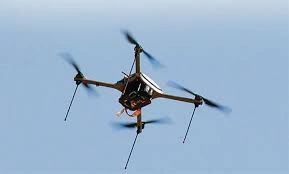
Authorities have launched a thorough investigation after an unidentified drone was observed flying over the airstrip of Solar Industries, a prominent defence and explosives manufacturer based near Nagpur, raising serious national security concerns.
The incident occurred on the evening of December 9, 2025, when security personnel at Solar Industries’ private airstrip on the Nagpur–Amravati Road, approximately 40 kilometres from the city, detected blinking lights moving across the night sky at around 7:15 PM. Due to poor visibility after dusk, the drone’s exact size and model could not be identified.
FIR Registered, Intelligence Bureau Joins Probe
Following the sighting, the company’s security staff alerted senior officials and later informed the Kondhali police, who promptly registered a First Information Report (FIR) against unknown individuals. Superintendent of Police Dr. Harssh Poddar confirmed that the matter is being treated with utmost seriousness, given the sensitive nature of the facility. The Investigation Bureau (IB) has also been roped in to support the probe.
Police teams conducted ground searches in neighbouring villages including Malkapur, Shiva, and Sawanga to determine whether the drone could have originated from a nearby private event or inadvertently strayed into restricted airspace. However, these efforts have so far yielded no leads.
Strategic Importance of Solar Industries
Solar Industries is a key player in India’s defence manufacturing sector, producing a wide range of military products including weaponised drones, loitering munitions, anti-drone systems, explosives, and warheads used by the armed forces. The company’s infrastructure includes a dedicated airstrip and advanced test facilities for unmanned aerial systems (UAS), which were inaugurated earlier this year as part of its expansion in defence capabilities.
This strategic footprint makes any aerial discrepancy over its premises highly sensitive, particularly as unmanned systems become increasingly central to modern warfare and defence readiness.
Security and Aviation Protocols Under Review
The drone incident has prompted authorities to reassess current security protocols and airspace monitoring around critical defence infrastructure. With emerging threats and the proliferation of inexpensive unmanned aerial vehicles, ensuring uninterrupted surveillance and swift response has become imperative.
Current aviation regulations prohibit drone flights over sensitive or restricted areas without proper authorization. The Directorate General of Civil Aviation (DGCA) mandates strict compliance with geofencing requirements and operator permissions for drones, particularly near industrial and defence zones. Analysts suggest that this sighting may accelerate enforcement of such regulations and lead to enhanced technological safeguards.
Broader Implications for National Security
Experts say the incident highlights the challenges India faces in securing its burgeoning defence manufacturing hubs from potential espionage or unintentional incursions. The growing use of drones in both civilian and military spheres means authorities must strike a balance between technological adoption and robust oversight.
Key security analysts recommend:
- Enhanced radar and RF-based detection systems around defence installations
- Rapid response protocols for unidentified aerial phenomena
- Collaboration between private industry and national agencies for shared surveillance intelligence
These steps are seen as vital in safeguarding infrastructure that contributes to India’s defence self-reliance and technological edge.

