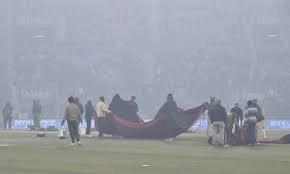
In a highly unusual turn of events that has sparked widespread debate, the fourth Twenty20 International (T20I) between India and South Africa scheduled at the Bharat Ratna Shri Atal Bihari Vajpayee Ekana Cricket Stadium in Lucknow was officially abandoned on Wednesday, December 17, 2025, with no play possible due to excessive fog and extremely poor visibility.
The anticipated fixture, part of a five-match T20I series, was poised to be a crucial encounter in the ongoing India–South Africa tour. However, persistent fog enveloped the venue throughout the evening, rendering conditions unsafe for both players and match officials. Despite multiple inspections by umpires extending over several hours, play could not begin, and the match was called off well past the scheduled start time.
Fog Fiasco in Lucknow: What Happened?
The match was originally slated to commence with the toss at 6:30 PM local time, followed by play under lights. From early evening, however, a dense layer of fog — exacerbated by the region’s poor air quality conditions — sharply reduced visibility across the ground. Umpires conducted six to seven inspections over a three‑hour span, assessing lighting and sightlines from the batter’s crease before concluding that conditions did not meet the minimum standards for safe play.
Officials made the final decision to abandon the match shortly after 9:30 PM, marking a rare instance in international cricket where neither the toss nor a single delivery took place due to weather conditions.
Impact on Series and Teams
With India leading the series 2–1, the abandonment means the host nation retains its advantage heading into the fifth and final T20I scheduled in Ahmedabad on December 19, 2025. India’s campaign has seen competitive exchanges, but the fog disruption in Lucknow now adds an unexpected twist ahead of the series decider.
Reactions and Controversy
The cancellation immediately sparked reactions from various quarters:
- Legendary South African fast bowler Dale Steyn, appearing as a commentator, openly criticised match officials for the prolonged delay and eventual call‑off, describing the sequence of inspections as baffling.
- Congress MP Shashi Tharoor questioned the rationale behind scheduling a high‑profile international cricket match in a northern Indian city during peak winter months notorious for smog, advocating for venues with better air quality.
- Cricket fans and ticket holders expressed anger and disappointment on social media, with some demanding refunds and questioning the planning behind the fixture.
Several voices, including commentators and cricket administrators, have suggested that the Board of Control for Cricket in India (BCCI) must revisit its scheduling strategies to avoid similar disruptions, with particular focus on winter fixtures in pollution‑prone regions.
Air Quality and Safety Concerns
Environmental experts highlighted that dense smog and a hazardous Air Quality Index (AQI) in Lucknow contributed significantly to the poor visibility, raising concerns not just about cricket, but about public health and safety at large in regions facing seasonal pollution.
The incident underscores the growing challenges of scheduling major sporting events in northern India during winter months, and has reignited discussions on balancing the excitement of live sports with safety and environmental considerations.