
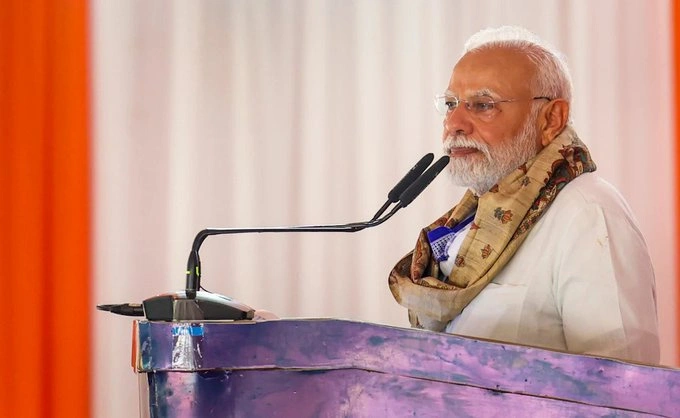
Dense winter fog disrupted Prime Minister Narendra Modi’s travel schedule on Friday, forcing his helicopter to return to Kolkata after it was unable to land in Nadia district, West Bengal. Despite the setback, the Prime Minister later proceeded with a key infrastructure engagement, inaugurating the new terminal building at Guwahati Airport—now the largest airport terminal in Northeast India.
Fog Forces Helicopter to Abort Landing in Nadia
Prime Minister Modi was scheduled to address a public rally in Nadia as part of his West Bengal visit. However, dense fog and poor visibility conditions prevented the helicopter from making a safe landing. Following aviation safety protocols, the pilot aborted the landing attempt and returned to Kolkata.
Officials confirmed that the decision was taken purely on safety grounds, underscoring the strict operational standards followed during VIP movements. Winter fog has frequently disrupted air and rail traffic across eastern and northern India in recent weeks, affecting commercial flights as well as official travel schedules.
Key factors behind the disruption included:
- Extremely low visibility due to dense fog
- Safety compliance under aviation norms
- Weather-related challenges common during peak winter months in eastern India
The Prime Minister’s Office later conveyed that alternative arrangements were reviewed, but the rally could not be rescheduled within the available timeframe.
Focus Shifts to Northeast as Guwahati Terminal Is Inaugurated
Despite the weather-related disruption in West Bengal, Prime Minister Modi went on to inaugurate the newly constructed terminal at Lokpriya Gopinath Bordoloi International Airport in Guwahati. The project marks a major milestone in aviation infrastructure development in the Northeast.
The new terminal significantly enhances passenger handling capacity and modernizes airport facilities, aligning with the government’s broader push for regional connectivity and economic integration.
Highlights of the Guwahati Airport Terminal:
| Feature | Details |
|---|---|
| Total area | Over 1.4 lakh square metres |
| Annual capacity | Up to 9 million passengers |
| Design focus | Sustainability and local cultural elements |
| Strategic role | Largest terminal in Northeast India |
The terminal is designed to support increasing air traffic, tourism growth, and business travel across Assam and neighboring states. Officials noted that the project will strengthen Guwahati’s position as a key aviation hub connecting the Northeast with the rest of India and international destinations.
Infrastructure Push Amid Travel Challenges
The contrasting events of the day—weather-induced disruption in West Bengal and a landmark inauguration in Assam—highlight the dual realities of governance: logistical challenges on one hand, and long-term infrastructure expansion on the other.
Prime Minister Modi reiterated the government’s commitment to improving connectivity in geographically diverse and previously underserved regions. The Guwahati airport expansion aligns with flagship initiatives focused on transport infrastructure, regional development, and economic inclusion.

