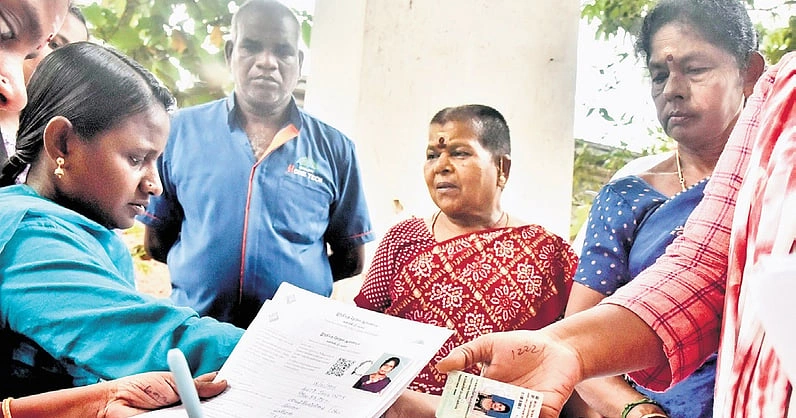
In December 2025, the Election Commission of India (ECI) released draft electoral rolls following a large-scale Special Intensive Revision (SIR), triggering nationwide debate over electoral integrity and voter inclusion. The exercise led to the removal of nearly 95 lakh names from voter lists across Madhya Pradesh, Chhattisgarh, Kerala, and the Andaman and Nicobar Islands, marking one of the most extensive voter roll cleanups in recent years. While the ECI has defended the move as essential to maintaining free and fair elections, political parties and civil society groups have raised concerns about potential disenfranchisement.
Massive Voter Roll Cleanup to Ensure Electoral Integrity
According to the ECI, the Special Intensive Revision was undertaken to “purify” electoral rolls by eliminating entries linked to deceased voters, duplicate registrations, and ineligible individuals. Such revisions are periodically conducted, but the scale of deletions in this cycle has drawn particular attention due to its potential impact ahead of upcoming elections.
The Commission emphasized that accurate voter lists are a cornerstone of democratic processes. Inflated or inaccurate electoral rolls can distort voter turnout data, enable electoral fraud, and undermine public trust in election outcomes. Officials noted that the SIR followed established procedures, including field verification, data cross-checking, and administrative scrutiny.
State-Wise Impact of the Special Intensive Revision
The deletions were not uniform and varied across states and Union Territories. The four regions affected accounted for a significant portion of the total removals:
- Madhya Pradesh: Large-scale deletions linked to migration and duplicate entries
- Chhattisgarh: Removal of outdated and deceased voter records
- Kerala: Intensive scrutiny of long-pending and duplicate registrations
- Andaman and Nicobar Islands: Cleanup of ineligible and non-resident voters
Key figures from the SIR exercise:
| Region | Estimated Names Removed | Primary Reasons |
|---|---|---|
| Madhya Pradesh | High volume | Migration, duplication |
| Chhattisgarh | Moderate | Deceased voters |
| Kerala | Significant | Duplicate and inactive voters |
| Andaman & Nicobar | Limited | Ineligible entries |
Political Reactions and Public Concerns
The voter list revision has sparked sharp political reactions. Opposition parties have questioned the timing of the Special Intensive Revision, arguing that large-scale deletions close to elections could disproportionately affect marginalized communities, migrant workers, and first-time voters. Some leaders have demanded greater transparency in the verification process and wider public awareness campaigns.
In response, the ECI clarified that the publication of draft electoral rolls allows citizens to file claims and objections. Eligible voters whose names were removed can apply for re-inclusion within the stipulated timeframe, ensuring that no genuine voter is permanently excluded without due process.
Broader Implications for India’s Electoral Process
The 2025 Special Intensive Revision underscores the ongoing challenge of balancing electoral roll accuracy with voter inclusion in a dynamic and mobile population. As internal migration increases and demographic patterns shift, maintaining updated voter databases will remain a complex administrative task.
Looking ahead, the ECI is expected to strengthen digital verification mechanisms and voter awareness initiatives to minimize errors and public apprehension. The current exercise, while controversial, highlights the Commission’s intent to safeguard electoral credibility—an objective that will continue to shape India’s democratic framework in the years to come.