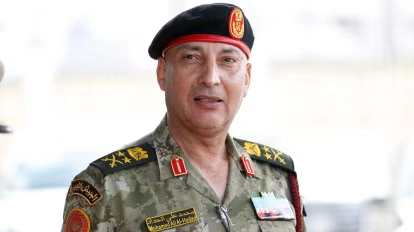
Libya’s fragile political and security landscape was jolted on Tuesday after Lieutenant General Mohammed Ali Ahmed al-Haddad, Chief of the General Staff of the UN-recognized Government of National Unity (GNU), was killed in a plane crash near Ankara, Turkey. The incident has sparked shock across Libya and renewed international attention on the country’s ongoing instability and regional security dynamics.
A Sudden Tragedy With Far-Reaching Implications
According to preliminary information, the aircraft carrying Lt Gen al-Haddad went down while approaching Ankara. Turkish authorities confirmed the crash and stated that investigations are underway to determine the cause. Weather conditions, technical failure, and human error are among the possibilities being examined, though no official conclusions have yet been announced.
The death of al-Haddad marks a significant blow to Libya’s military leadership. As Chief of the General Staff, he played a central role in coordinating security policy, overseeing military integration efforts, and maintaining cooperation with international partners, particularly Turkey, which has been a key backer of the GNU.
Who Was Mohammed Ali Ahmed al-Haddad?
Lt Gen al-Haddad was widely regarded as one of the most influential military figures in western Libya. His leadership was pivotal during a period marked by political transition, fragile ceasefires, and attempts to unify rival armed factions under a single national command.
Key roles and responsibilities included:
- Overseeing military coordination under the GNU
- Supporting ceasefire mechanisms and security sector reform
- Managing defense cooperation with foreign allies
- Acting as a stabilizing figure amid factional tensions
His death creates an immediate leadership vacuum at a time when Libya remains divided between competing administrations and armed groups.
Political and Security Fallout
The Libya plane crash near Ankara has implications beyond the loss of a senior military officer. Analysts note that al-Haddad’s absence could slow progress on military unification and embolden rival factions seeking greater influence.
Potential short-term impacts include:
- Delays in defense and security decision-making
- Heightened political uncertainty within the GNU
- Increased pressure on Prime Minister Abdul Hamid Dbeibeh to appoint a successor
- Renewed international concern over Libya’s stability
The incident may also affect Libya–Turkey relations, given Ankara’s strategic role in training and supporting GNU-aligned forces.
International and Domestic Reactions
Condolences poured in from Libyan political leaders and international stakeholders shortly after the news broke. Officials emphasized al-Haddad’s role in maintaining relative calm in western Libya and called for unity during the transition period following his death.
Within Libya, public reaction has been mixed with grief and anxiety, reflecting broader fears that the loss of a key military figure could destabilize an already fragile environment.
Looking Ahead
As investigations into the Ankara aircraft crash continue, attention is shifting to what comes next for Libya’s military leadership. The appointment of a new Chief of the General Staff will be closely watched, both domestically and internationally, for signals about the GNU’s direction and its commitment to stability.
In a country still navigating post-conflict recovery, the death of Lt Gen Mohammed Ali Ahmed al-Haddad is more than a tragic accident—it is a critical moment that could shape Libya’s security and political trajectory in the months ahead.