
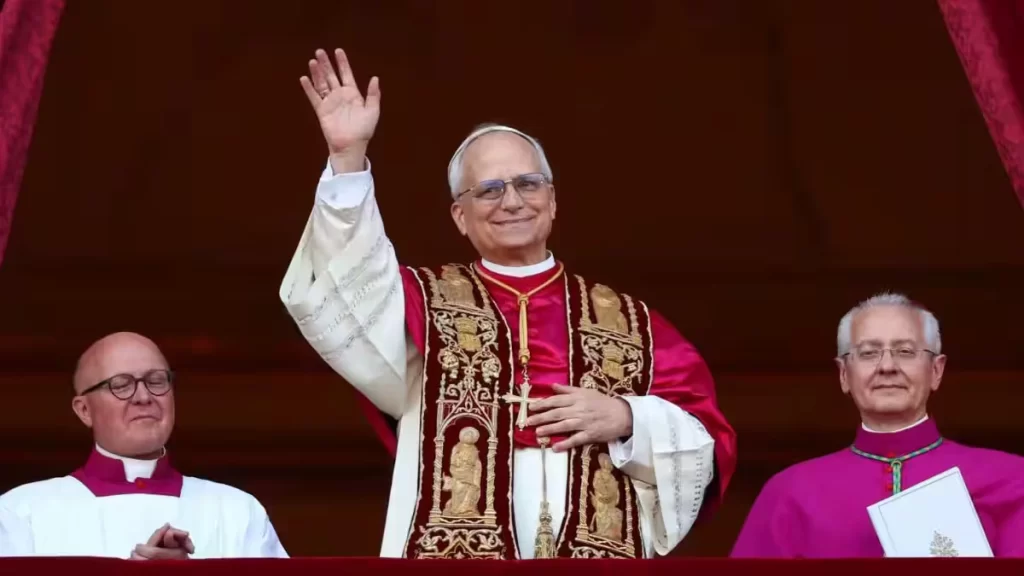
In a striking development at the intersection of faith and politics, newly appointed Catholic bishops in the United States have emerged as some of the most vocal critics of President Donald Trump’s intensified migrant crackdown in 2025. Appointed by Pope Leo XIV—the first American pope, elected in May 2025—these bishops are reshaping the Catholic Church’s public role in national debates by forcefully challenging immigration policies they describe as morally indefensible and contrary to core Christian teachings.
The confrontation marks a significant shift in the U.S. religious landscape. While the Catholic Church has historically advocated for immigrant rights, the current wave of episcopal opposition is notable for its unity, public visibility, and direct moral framing. The bishops’ statements reflect Pope Leo XIV’s pastoral emphasis on human dignity, compassion for migrants, and the Church’s responsibility to speak against policies perceived as unjust.
A Church Reasserting Its Moral Voice
Since taking office, Pope Leo XIV has appointed several bishops to key dioceses across border states and major urban centers. These leaders have openly criticized the Trump administration’s immigration enforcement measures, including mass deportations, expanded detention of asylum seekers, and stricter border controls. In sermons, pastoral letters, and press briefings, they have argued that such policies undermine humanitarian principles and disproportionately harm vulnerable communities.
Key themes emphasized by the bishops include:
- Protection of human dignity, regardless of legal status
- Opposition to family separations and prolonged migrant detention
- Defense of asylum rights as a moral obligation
- Call for comprehensive immigration reform rooted in compassion
This coordinated messaging has amplified the Church’s stance, positioning Catholic bishops as influential moral critics of federal immigration policy in 2025.
Immigration Policy and Political Tensions
The Trump administration’s renewed migrant crackdown has been framed by the White House as essential to national security and economic stability. However, bishops appointed by Pope Leo XIV argue that these policies reflect an overly punitive approach that conflicts with Christian social teaching. Their criticism has intensified tensions between the federal government and religious institutions, particularly as immigration remains a central issue in U.S. political discourse.
Notably, this opposition does not stem from partisan alignment but from theological conviction. Church leaders have emphasized that their critique is grounded in longstanding Catholic doctrine rather than political ideology, reinforcing the Church’s claim to moral authority independent of electoral politics.
Why This Moment Matters
The growing visibility of Catholic opposition highlights a broader trend: the reassertion of religious influence in public policy debates. With Pope Leo XIV’s leadership, the U.S. Catholic Church appears more unified and outspoken on immigration than at any point in recent years.
Key implications include:
| Area | Impact |
|---|---|
| Church-State Relations | Heightened tension over immigration policy |
| Public Opinion | Increased moral scrutiny of migrant enforcement |
| Catholic Leadership | Stronger alignment with Vatican priorities |
| Future Policy Debates | Sustained religious pressure for reform |
Looking Ahead
As immigration continues to shape America’s political and social landscape, the role of Catholic bishops appointed by Pope Leo XIV is likely to expand. Their vocal resistance to the Trump administration’s migrant crackdown signals a renewed willingness by the Church to challenge state power on ethical grounds. Whether this moral pushback translates into tangible policy change remains uncertain, but its influence on public discourse is already undeniable.
In 2025, the clash between faith-based advocacy and hardline immigration enforcement has become a defining feature of the national conversation—one that underscores the enduring power of moral authority in shaping America’s future.

